
If you’re a vehicle manufacturer, importer, or brand owner in India, chances are you’ve already heard about Vehicle EPR Compliance—but clarity is still missing. Many producers only realise the seriousness of ELV obligations when CPCB deadlines pass, registrations are delayed, or regulatory notices land on their desk. With the Environment Protection (End-of-Life Vehicles) Rules, 2025 now in force, vehicle EPR is no longer a future requirement—it’s an active compliance responsibility that directly impacts business continuity.
This guide explains what Vehicle EPR compliance actually means, who must comply, and how producers can avoid penalties, delays, and unnecessary regulatory exposure.
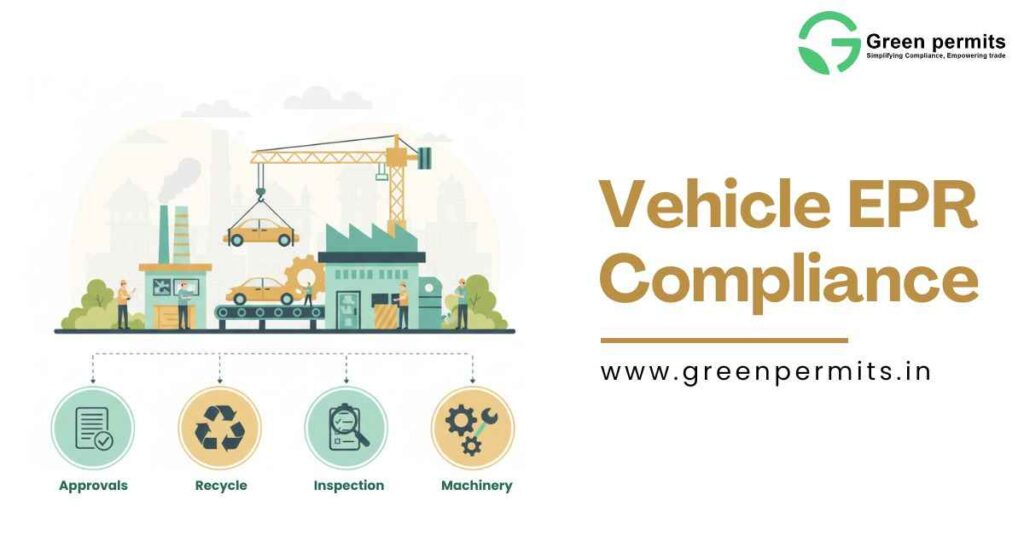
Vehicle EPR Compliance refers to the Extended Producer Responsibility placed on vehicle producers for the environmentally sound management of End-of-Life Vehicles (ELVs). Under this framework, producers are legally responsible for ensuring that vehicles introduced into the Indian market are properly scrapped, recycled, and processed once they reach the end of their usable life.
Instead of informal dismantling or unsafe disposal, ELVs must be routed through Registered Vehicle Scrapping Facilities (RVSFs). Producers fulfil their obligations by purchasing EPR certificates generated by these authorised facilities.
From a regulatory perspective, EPR shifts accountability upstream—placing responsibility on producers rather than vehicle owners alone.
Vehicle EPR compliance in India is governed primarily by:
These rules are administered by the Central Pollution Control Board (CPCB) through a centralised online EPR portal.
The rules operate alongside:
This means vehicle producers must view EPR not as a standalone task, but as part of a broader environmental compliance ecosystem.
Under the ELV EPR framework, a Producer is any entity engaged in:
This definition applies regardless of:
Even companies importing vehicles for internal use are covered under the compliance framework.
Vehicle EPR compliance applies to:
Certain categories such as agricultural tractors and harvesters are exempt, but the majority of road-going vehicles fall within scope.
Importantly, export-only manufacturers may be exempt from EPR targets but are still required to register on the CPCB EPR portal and declare their status.
EPR obligations are calculated based on the steel content of vehicles introduced into the Indian market during specified years. Targets are phased to allow gradual implementation.
| Vehicle Category | Compliance Period | EPR Target |
|---|---|---|
| Transport Vehicles | FY 2025–26 to FY 2029–30 | Minimum 8% of steel used |
| Transport Vehicles | FY 2030–31 to FY 2034–35 | Minimum 13% of steel used |
| Transport Vehicles | FY 2035–36 onwards | Minimum 18% of steel used |
| Non-Transport Vehicles | FY 2025–26 to FY 2029–30 | Minimum 8% of steel used |
| Non-Transport Vehicles | FY 2030–31 to FY 2034–35 | Minimum 13% of steel used |
| Non-Transport Vehicles | FY 2035–36 onwards | Minimum 18% of steel used |
Business Insight:
This phased structure allows producers to plan compliance costs gradually, but failure to meet early-year targets leads to cumulative regulatory risk and higher future obligations.
All producers must register on the centralised CPCB EPR portal for ELVs. This portal acts as the single compliance interface for:
Registration is mandatory before carrying out any business activity related to vehicles under the EPR framework.
Incomplete or incorrect applications often result in portal rejection, delayed approvals, or regulatory scrutiny, making accurate documentation critical.
RVSFs are authorised entities responsible for:
Producers cannot self-certify compliance. EPR obligations can only be met by purchasing certificates generated by registered RVSFs through the CPCB portal.
EPR certificates represent the verified quantity of steel recovered from ELVs processed by RVSFs. These certificates are:
| Aspect | Producer | RVSF |
|---|---|---|
| Portal Registration | Mandatory | Mandatory |
| ELV Processing | Not allowed | Core responsibility |
| Certificate Generation | Not allowed | Yes |
| Certificate Purchase | Yes | No |
| EPR Target Fulfilment | Yes | Supports |
| Regulatory Reporting | Yes | Yes |
Business Insight:
Producers relying on unregistered or informal scrapping channels expose themselves to direct violations and potential environmental compensation.
Vehicle producers must file:
Returns must be filed within prescribed CPCB timelines, and delays can lead to notices, penalties, or suspension of registration.
Accurate data reconciliation between:
is one of the most common compliance challenges faced by producers.
Many businesses struggle not due to intent, but due to execution gaps. Common issues include:
These mistakes often surface during audits or CPCB scrutiny—when corrective action becomes expensive and time-consuming.
Non-compliance with Vehicle EPR obligations can result in:
In 2025, several automotive producers faced regulatory notices due to delayed EPR declarations following the rollout of ELV Rules. In multiple cases, CPCB required retroactive obligation fulfilment, increasing compliance costs and delaying operational approvals.
Vehicle EPR compliance in India has moved from policy discussion to active regulatory enforcement. With the Environment Protection (End-of-Life Vehicles) Rules, 2025 now in force, producers can no longer rely on informal scrapping channels, partial reporting, or last-minute compliance fixes.
For vehicle manufacturers, importers, and brand owners, EPR is now directly linked to:
Ignoring or delaying compliance exposes producers to penalties, portal restrictions, registration suspension, and operational disruptions. On the other hand, businesses that plan EPR obligations early gain better control over costs, smoother approvals, and reduced compliance stress.
From a strategic perspective, early Vehicle EPR compliance delivers clear advantages:
As India tightens its environmental governance, Vehicle EPR compliance will increasingly become a baseline requirement, not a competitive differentiator. Producers who treat EPR as a structured compliance function—not an afterthought—will be best positioned to operate without disruption.
📞 +91 78350 06182
📧 wecare@greenpermits.in
Book a Consultation with Green Permits