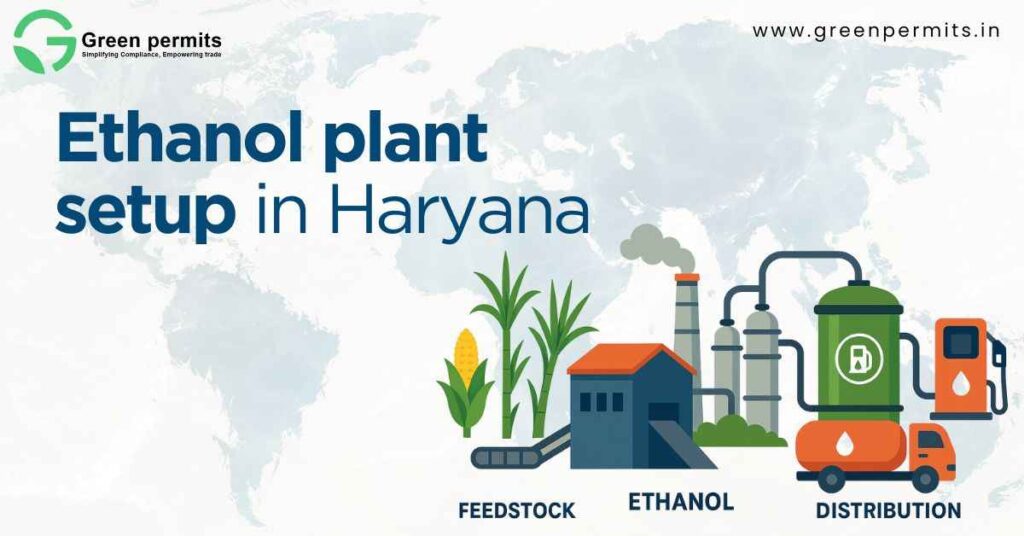
Ethanol Plant Setup in Haryana: Licenses, Costs, Feedstock & Complete Setup Process
Introduction: Why Haryana Is Emerging as an Ethanol Hub
Someone planning to diversify their agro-business in Haryana will notice two things: the constant conversation around stubble burning, and the sharp push toward ethanol blending. With abundant paddy straw, rice husk, and strong grain output, Haryana has become one of the most promising states for ethanol production.
But while interest is high, the real challenge for most first-time investors is understanding how licensing, technical approvals, feedstock planning, and plant financials actually work. This guide breaks down all of it step by step so you can make informed decisions before investing.
State Ethanol Policy Overview (Haryana Biofuel / Industrial Policy Highlights)
Haryana’s policy framework encourages ethanol production to reduce stubble burning, support farmers, and meet national blending targets. The government offers both fiscal and non-fiscal support to facilitate new distillery and ethanol units.
What the policy enables
Promotion of grain-based (1G) and lignocellulosic-based (2G) ethanol plants.
Capital assistance for setting up new renewable fuel units.
Fast-track approvals under the single-window clearance mechanism.
Land allotment benefits through industrial estates.
Encouragement for use of crop residue, helping address stubble burning.
Why this matters to investors
These provisions reduce project uncertainty and improve the financial viability of ethanol plants, particularly 2G facilities that rely on paddy straw.
Suitable Locations & Land Requirements in Haryana
Selecting the right district and land parcel significantly affects logistics, feedstock cost, and regulatory approvals.
Best-suited regions based on feedstock and infrastructure
Karnal, Kurukshetra, Kaithal: High paddy straw density for 2G projects.
Hisar, Jind, Rohtak: Strong grain availability for 1G ethanol.
Panipat, Sonipat: Developed industrial clusters and access to OMC depots.
Yamunanagar: Timber and agro-industrial zone for biomass-linked operations.
Land requirement
1G ethanol plant (40–80 KLPD): 6–10 acres.
2G ethanol plant (80–150 KLPD): 15–25 acres due to biomass storage and handling areas.
Land selection factors to consider
Distance from residential areas and sensitive zones.
Zoning category (industrial vs agricultural).
Road access for biomass transportation and tanker movement.
Feasibility of groundwater abstraction permissions.
Availability of grid power or substation connectivity.
Insight
Plants set inside government industrial estates often get faster approvals because zoning and environmental classification are already defined.
Raw Material Availability (Rice Husk, Paddy Straw, Grain, Sugarcane)
A dependable feedstock supply chain is the backbone of ethanol production. Haryana’s agricultural output is particularly favourable for ethanol investors.
Feedstock overview table
Feedstock
Availability
Cost Range
Suitability
Paddy Straw
Very high in northern Haryana
Low cost per kg due to local surplus
Ideal for 2G ethanol
Rice Husk
Abundant near rice mills
Moderate cost
Boiler fuel and pre-processing
Broken Rice, Maize, Surplus Grain
Consistently available
Varies seasonally
1G ethanol
Sugarcane Juice/Syrup
Limited to specific belts
Higher logistics cost
Selective 1G projects
Why Haryana stands out
The state produces several million tonnes of paddy straw annually, making it one of the most suitable locations for 2G ethanol. For grain-based units, consistent availability of broken rice and maize keeps production stable throughout the year.
Licenses & Approvals Needed in Haryana
Licenses determine the project timeline. Even a small documentation mismatch can delay approvals significantly. Ethanol plants fall under “Red Category” and require detailed scrutiny at every step.
Core approvals required
Land allotment or Change of Land Use (CLU)
Consent to Establish (CTE) from HSPCB
Environmental Clearance (where applicable)
Excise Department approvals
Factory license
Boiler and pressure vessel approvals
Fire Safety NOC
Consent to Operate (CTO) after commissioning
Common causes of delay
Incomplete process flow diagrams
Incorrect pollution load calculations
Mismatch between plant layout and safety drawings
Missing hazardous waste documentation
Groundwater permission issues
Investors who prepare documentation early and align it with real plant design typically finish approvals much faster.
Pollution NOC (CTE/CTO)
Haryana State Pollution Control Board requires detailed project information before permitting any distillery or ethanol unit.
What is evaluated during CTE
Air emissions from boilers and DG sets
Effluent treatment and Zero Liquid Discharge feasibility
Solid waste and hazardous waste management
Water balance, steam requirements, and reuse plan
Impact on surrounding land and water bodies
Documentation required
Detailed Project Report
Process flow diagram
Site layout
Water and wastewater treatment plan
ETP/ZLD design details
Stack emission and boiler specifications
Waste storage, handling, and disposal plan
Practical insight
Many applicants face delays when their water balance numbers do not align with equipment design or ZLD capacity. Ensuring accuracy reduces queries and compliance objections.
Excise Permissions
Since ethanol is a controlled substance, excise approvals govern production capacity, storage, movement, and sale.
Key permissions
Distillery license
Storage license (bonded/unbonded)
Transport permits for ethanol movement
Denaturation approvals
Tank calibration and safety inspection
Why excise matters early
Excise departments inspect the storage tanks, flow meters, locking mechanisms, and movement control systems before granting operational permission. Coordinating this simultaneously with CTE/CTO ensures a smoother commissioning timeline.
Factory License
Industrial units producing ethanol must comply with the Factories Act.
Requirements include
Worker safety and training documentation
Boiler and pressure vessel certifications
Occupational health and hazard control plans
Electrical safety audits
Machinery layout approvals
This license is mandatory before commencing operations.
Fire NOC
Due to the flammable nature of ethanol, fire safety is one of the most critical approvals.
Fire department checks
Hydrant and sprinkler system coverage
Water storage tanks dedicated for firefighting
Foam extinguishing systems
Fire tender access paths
Smoke and heat detection
Safe separation distance between tanks, boilers, and buildings
CAPEX & OPEX Cost Estimate for Haryana-Based Ethanol Projects
Capital and operational costs vary depending on feedstock type, technology, and plant size. Haryana provides cost advantages due to feedstock proximity and logistics efficiency.
Investment comparison table
Cost Component
1G Ethanol
2G Ethanol
Land & Civil Work
Moderate
Higher due to biomass yard
Machinery & Equipment
Medium range
High (complex pre-treatment units)
Pollution Control Systems
ZLD and scrubbers
Larger ZLD systems + biomass handling
Working Capital
Moderate
High due to biomass stocking
Total CAPEX
Moderate
2–3× higher than 1G
Financial insight
While 2G ethanol requires higher investment, the long-term stability of paddy straw availability and multiple government incentives improve overall project returns.
Feedstock Supply Chain & Logistics Planning in Haryana
Feedstock logistics often determine whether the plant can run continuously throughout the year.
Important components of a reliable supply chain
Mapping villages with high paddy straw or grain production
Signing contracts with FPOs and local aggregators
Investing in baling, shredding, and storage systems
Maintaining moisture-controlled biomass sheds
Planning seasonal buffer stock (60–90 days)
Establishing forward and reverse logistics for residue and co-products
Example insight
Many 2G plants allocate significant area only for biomass handling because storage conditions directly affect conversion efficiency.
Government Subsidies & Financial Incentives (State + Central)
Both central and state governments support ethanol manufacturing through financial incentives.
Central incentives
Interest subvention for ethanol projects
Soft loans under priority sector lending
Viability Gap Funding for 2G ethanol units
State-level incentives in Haryana
Capital subsidy for new units
Electricity duty exemption
Stamp duty refund
SGST reimbursement for eligible units
Infrastructure assistance within industrial estates
Why incentives matter
These benefits reduce overall project costs and shorten the payback period, making ethanol plants more feasible even for medium-sized investors.
Technology Options for Ethanol Production (1G vs 2G)
Choosing the right technology determines operational cost, efficiency, and long-term sustainability.
1G Technology (Grain/Sugar Sources)
Lower investment
Simpler operation
Dependent on grain market fluctuations
2G Technology (Paddy Straw/Biomass)
Higher investment but scalable
Strong government support
Aligns with crop residue management goals
More sustainable and future-proof
Choosing the right option
Businesses in grain-surplus regions may prefer 1G, while areas with abundant paddy straw are ideal for 2G units.
Manpower, Machinery & Plant Layout
Ethanol plants require coordinated functioning across several units.
Key machinery includes
Biomass handling equipment
Pre-treatment reactors
Fermentation tanks
Distillation columns
DDGS dryers or biomass residue units
Boilers and turbines
ZLD systems
Storage tanks
Manpower requirement
60–120 trained personnel depending on plant size
Skilled operators for fermentation, boiler, and distillation units
Maintenance and utility engineers
Safety and compliance officers
Layout insight
A well-planned plant layout simplifies safety compliance and reduces piping, electrical, and civil costs.
Market Opportunities for Ethanol Sale in Haryana
Demand for ethanol is stable and growing.
Major sale avenues
Oil Marketing Companies for blending
Chemical and pharmaceutical industries
Industrial solvents
Export potential through traders
Why Haryana is advantageous
The presence of multiple refinery and depot locations ensures steady demand and reduced transportation cost.
Challenges & Compliance Issues Faced by Entrepreneurs
Even though Haryana is a favorable state, several challenges arise during project execution.
Common challenges
Documentation inconsistencies in approval files
Seasonal feedstock variation
Complex fire safety requirements
High upfront CAPEX for 2G units
Skilled manpower shortage
Disruption in biomass collection during monsoon
How to mitigate them
Prepare compliance documents early
Use standardized plant designs
Secure long-term feedstock contracts
Maintain adequate working capital for biomass stocking
Step-by-Step Process to Set Up an Ethanol Plant in Haryana
Identify suitable land and finalize feedstock strategy
Prepare a Detailed Project Report (DPR)
Apply for Change of Land Use or Industrial allotment
Submit CTE application to HSPCB
Initiate Environmental Clearance if required
Finalize plant design, machinery selection, and layout
Apply for Fire NOC and Factory License
Begin construction and equipment installation
Apply for Excise permissions
After commissioning, apply for CTO
Sign offtake agreements with OMCs or industrial buyers
This sequential approach ensures minimal project delays and controlled investment risk.
Conclusion: Is Haryana the Right State for Your Ethanol Project?
Haryana offers abundant agricultural residues, strong industrial infrastructure, and supportive state policies — making it one of the most promising destinations for ethanol manufacturing. The real determinant of success is not just investment but compliance readiness, feedstock planning, and timely execution.
With the right approach, ethanol projects in Haryana can achieve steady returns while contributing to sustainable fuel goals.
CTA — Ready to Set Up Your Ethanol Plant in Haryana?