
Ethanol Plant Setup in Bihar

When Ramesh, a mid-sized trader from Begusarai, first considered entering the ethanol sector, the opportunity sounded exciting but the path felt unclear. Government news claimed Bihar was becoming a major ethanol hub, yet no one explained the actual steps, the approvals, the investment, or the raw material strategy. Each department — excise, pollution control, district administration — had its own process. Every consultant he spoke to gave fragmented answers.

If you’ve ever felt the same while exploring an ethanol plant setup in Bihar, this guide is written specifically for you. It breaks down the entire journey — from policy and feedstock to licensing, capital cost, environmental rules, market opportunities, and timelines — in practical language so that entrepreneurs can make informed decisions with confidence.
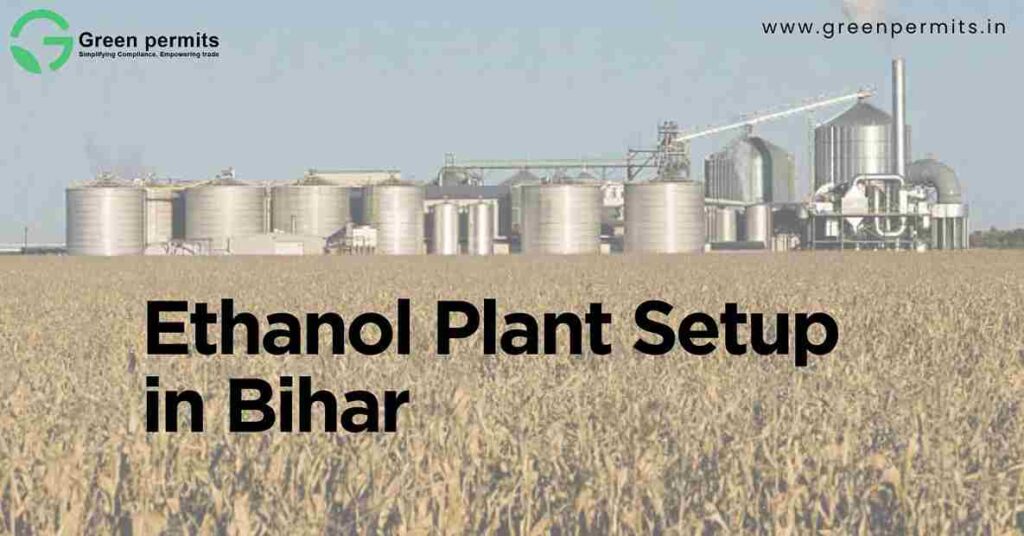
Ethanol Plant Setup

Bihar as a Growing Ethanol Production Hub

Bihar’s emergence in the ethanol ecosystem is not accidental. It is driven by a combination of agricultural strengths, government intent, and national-level fuel blending targets.

Agricultural Strength Fuelling the Sector

Bihar is one of India’s leading maize-producing states. Grain-based ethanol production finds a natural home here because:

  • Maize procurement is easier due to dense mandis and farmer clusters.
  • Multiple districts produce surplus grain year after year.
  • Local traders and FPOs have strong supply linkages.

The state is equally positioned to contribute through rice surplus in pockets and sugarcane clusters in the western region.

Government Push & Policy Support

Bihar has formally positioned itself as an ethanol-focused industrial destination. The state promotes grain-based, dual-feed, and cane-based ethanol units. The recent emphasis on biofuel corridors, district-level industry facilitation, and incentives has accelerated investor interest.

Business Relevance for Entrepreneurs

The combination of maize availability + OMC demand + subsidy support gives Bihar an investment case that very few states can match, especially for 60 KLPD – 120 KLPD grain-based units.

Bihar Ethanol Production Promotion Policy

The policy environment in Bihar is one of the core reasons ethanol investors are taking the state seriously.

What the Policy Aims to Achieve

  • Create a predictable environment for grain-based ethanol production.
  • Reduce state dependence on traditional industries by diversifying into biofuels.
  • Encourage rural job creation through new agro-industrial units.
  • Support India’s fuel blending mission.

Key Features of the Policy in Practical Terms

  • Capital Subsidy Support
    Investors setting up ethanol units supplying to oil marketing companies become eligible for an additional subsidy on plant and machinery. This helps reduce up-front financial burden.
  • Support for ZLD and ETP
    Since environmental compliance is mandatory, the policy makes it easier by allowing ZLD/ETP costs to be considered for subsidy.
  • Modern Industrial Approach
    The policy encourages technologically advanced, energy-efficient, and multi-feedstock plants that can operate round the year without seasonal disruptions.

What This Means for Investors

Policies become meaningful only when they translate into cost savings, easier approvals, and improved project viability. Bihar’s policy structure delivers on all three, especially when combined with incentives in industrial promotion schemes.

Best Locations for Feedstock Access

Choosing the right district is as important as choosing the plant capacity or technology. Feedstock availability is the backbone of profitability.

Maize-Dominant Districts (Ideal for Grain-Based Units)

These districts have long-standing maize belts, making procurement easier:

  • Begusarai
  • Samastipur
  • Darbhanga
  • Vaishali
  • Sitamarhi
  • Madhubani
  • Muzaffarpur

These regions have well-established procurement markets and transport corridors, helping reduce per-tonne logistics cost.

Emerging Ethanol Investment Corridors

Recent government activity, new projects, and land availability highlight these districts:

  • Bhagalpur
  • Jamui
  • Kaimur
  • Buxar
  • Barh
  • Vaishali
  • Muzaffarpur
  • Begusarai

Investors often shortlist these because they have a clear model from recently commissioned ethanol plants.

Sugarcane & Dual-Feed Potential Zones

Regions like Gopalganj, Saran, Bhojpur, and West Champaran offer seasonal cane-based feedstock. Plants here combine grain for most of the year and processed cane syrup during crush season.

Investor Insight

The district you choose impacts the plant’s daily operating cost. Plants located near robust grain markets enjoy higher margins because raw material cost constitutes more than half of total production cost.

Raw Material Landscape (Maize, Rice, Grain)

An ethanol project is only as strong as its raw material strategy. Bihar’s multi-grain potential is a significant advantage.

Primary Feedstocks

  • Maize: The primary and most stable grain option, widely cultivated in north and central Bihar.
  • Broken Rice: Available at competitive prices from rice mills, ideal for blending.
  • Sorghum & Other Grains: Useful for flexible-feed plants.
  • Sugarcane Juice/Syrup: Seasonal add-on feedstock in sugar belt districts.

Feedstock Requirement for Capacity Planning

A standard grain-based plant requires:

  • 1 KLPD → approx. 3 to 3.2 tonnes of grain per day
  • 60 KLPD → approx. 180 to 190 tonnes per day
  • 120 KLPD → approx. 360 to 380 tonnes per day

Practical Procurement Strategies

  • Long-term agreements with FPOs reduce price volatility.
  • Mandis closer to the plant reduce inbound logistics cost.
  • Plants with dual-feed flexibility operate with fewer shutdowns.

Required Permits & Licensing Pathway in Bihar

This is the part most entrepreneurs underestimate. The ethanol sector is promising, but it is documentation-heavy. A structured approach prevents delays.

Land & Local Administration Approvals

  • Land conversion (if land is agricultural)
  • Factory layout and civil plan approval
  • Fire department NOC
  • Local body clearances for building and construction

Environmental Approvals

These are time-sensitive and must be planned correctly:

  • Consent to Establish (CTE)
  • Environmental Clearance (EC) if applicable
  • Consent to Operate (CTO) after commissioning
  • Approval for hazardous waste handling
  • Water extraction permissions if tube-well/groundwater is used

Excise & Production Licences

For ethanol production, excise licensing is mandatory:

  • Distillery licence
  • Permission for bonded spirit storage
  • Transport and denaturation approvals

Safety & Technical Approvals

  • PESO licence for ethanol and chemical storage
  • Boiler inspection and certification
  • Electrical inspectorate approval

Why Approvals Take Time

Every department looks at a different part of your project. The pollution control board checks water balance, emissions, and ZLD compliance. Excise checks spirit safety and storage. PESO checks fire risk. An experienced consulting partner ensures documents align so that one approval does not contradict another.

Investment & Operational Cost Structure

Below are realistic cost insights that prospective investors use for decision-making.

Capital Cost (CAPEX) Overview

Cost Component 60 KLPD Unit 120 KLPD Unit
Civil Construction ₹18–22 crore ₹28–35 crore
Fermentation/Distillation ₹45–55 crore ₹70–90 crore
DDGS Dryer System ₹15–18 crore ₹25–32 crore
Boiler & Turbine ₹15–20 crore ₹25–30 crore
ZLD/ETP ₹10–15 crore ₹18–25 crore
Storage & Utilities ₹8–12 crore ₹15–20 crore
Total CAPEX ₹115–145 crore ₹180–230 crore

Interpretation for Investors

Bigger plants outperform smaller ones because the cost of boilers, dryers, and utilities scales slower than ethanol output. This improves per-litre cost.

Operational Cost (OPEX) Structure

Expense Head Share of Total Cost
Raw Material 60–65%
Power & Steam 12–15%
Manpower 4–6%
Chemicals & Consumables 4–5%
Maintenance 3–4%
Logistics 5–7%

Operational Insight

If grain prices rise suddenly, profitability suffers. This is why choosing a district with strong procurement infrastructure is critical.

Technology & Production Flow

Ethanol production from grain is a mature and highly efficient process. Bihar’s modern units use advanced equipment for lower steam consumption and higher yields.

Typical Production Flow

  1. Grain milling
  2. Slurry preparation & liquefaction
  3. Saccharification
  4. Fermentation
  5. Distillation
  6. Molecular sieve dehydration
  7. DDGS drying
  8. Storage and dispatch

Technology Upgrades to Consider

  • Multi-effect evaporators
  • High-efficiency boilers
  • Advanced fermentation systems
  • Automated control rooms
  • CO₂ recovery systems for additional revenue

Investing in better technology yields long-term savings in steam, power, and maintenance.

State Incentives (Capital Subsidy, Interest Waivers, SGST Refund)

Bihar’s incentives significantly improve project feasibility.

Capital Subsidy

Eligible units receive a subsidy on the cost of plant and machinery, reducing initial debt load.

Interest Subsidy

Units may qualify for support on term loan interest, easing financial stress during the first years of repayment.

SGST Refund

Reimbursement of state GST helps improve cash flow and lowers the effective tax burden on production.

Infrastructure Support

Some units may receive:

  • Stamp duty concessions
  • Electricity duty exemptions
  • Support in industrial area allocation

Investor Takeaway

The subsidy structure often improves IRR by several percentage points, which can influence whether a project secures bank financing quickly.

Logistics & Market Distribution in Eastern India

An ethanol plant in Bihar benefits from both internal and external market access.

Internal (Within Bihar)

OMCs typically issue tenders for ethanol purchase for blending at local depots. This ensures guaranteed buyers for most capacities.

External (Eastern Region)

Deficit states such as Jharkhand, Odisha, West Bengal, and parts of Assam require additional ethanol to meet blending targets. Plants in Bihar are well-positioned to supply these states due to shorter transport distances and lower freight costs.

Strategic Advantage

Compared to states with heavy sugar mill concentration, Bihar’s grain model allows more flexible operations and consistent output.

Environmental Norms & Pollution Control

Environmental norms are strict but manageable with proper planning.

Core Compliance Requirements

  • Zero Liquid Discharge (ZLD)
  • Multi-Effect Evaporator (MEE) for thin slop
  • Dryer for DDGS
  • Dust and emission control in boilers
  • Solid waste management plan
  • Fire safety compliance

Typical Compliance Issues

  • Incorrect water balance calculations
  • Under-sized ETP systems
  • Missing source segregation plans
  • Boiler stack emission exceedances
  • Improper hazardous waste storage

How to Avoid Delays

Submit a detailed environmental management plan that aligns engineering, chemical usage, wastewater flow, and fuel consumption.

Challenges & Opportunities in Bihar

Key Challenges

  • Grain price volatility
  • Need for skilled plant operators
  • Logistics in monsoon-heavy districts
  • Capital-intensive nature of ZLD systems
  • Delays in multi-department approvals without proper coordination

Major Opportunities

  • Rising demand under E20 blending
  • Ability to export ethanol to several eastern states
  • Growth in maize production improving feedstock security
  • Potential for by-product diversification (DDGS, CO₂)
  • Strong government focus on renewable energy-based industries

Plants that achieve efficient operations and compliance early can build long-term competitive advantages.

Setup Roadmap for Bihar Ethanol Unit

A structured roadmap prevents mistakes and keeps timelines under control.

  1. Concept Study & Market Assessment
    Analyse feedstock availability, land options, blending demand, and competitor presence.
  2. Detailed Project Report (DPR)
    Technical specs, water balance, steam balance, financial feasibility, layouts, and machinery selection.
  3. Land Acquisition & Pre-Construction Planning
    Soil testing, land conversion, layout approval, and utility planning.
  4. Environmental Clearances
    Apply for CTE and EC where required.
  5. Financial Closure
    Submit DPR and subsidy details to banks for loan sanctions.
  6. Order Machinery & Begin Civil Construction
    Ensure engineering designs align with environmental filings.
  7. Apply for Excise Licences & Safety Permits
    Bonded storage, denaturation permissions, PESO approvals.
  8. Commissioning & CTO Approval
    Conduct trial runs, performance testing, and obtain final operating consent.
  9. Commercial Supply to OMCs
    Bid in tenders and initiate regular dispatches.

Conclusion: Bihar as a Strategic Ethanol Investment Region

Bihar offers a rare combination of agricultural strength, policy support, industrial infrastructure, and market demand that positions it as a high-potential zone for ethanol entrepreneurs. When approached with a strong compliance plan, realistic financial modelling, and a reliable consulting ecosystem, an ethanol plant setup in Bihar can deliver dependable long-term returns.

Invest early, plan thoroughly, and build the project on solid operational and environmental foundations to maximize success.

Book a Consultation with Green Permits

📞 +91 78350 06182
📧 wecare@greenpermits.in
Book a Consultation with Green Permits

Book a Technical Call with Expert

📞 +91 78350 06182

FAQs

Bihar has abundant maize, strong policy incentives, and growing ethanol demand, making it ideal for grain-based ethanol production.

Most investors choose 60–120 KLPD units because they offer better operational efficiency and cost competitiveness.

You need CTE/CTO from the Pollution Control Board, excise licences, PESO approval, fire NOC, and land/building permits.

Yes. Bihar offers capital subsidy, SGST reimbursement, and interest support for eligible ethanol units.

Maize is the primary feedstock, supplemented by broken rice, sorghum, and seasonal sugarcane syrup in some districts.