
Uttar Pradesh is quietly becoming one of India’s most strategic regions for the recycling industry. Over the last five years, the state has transformed from a consumption-heavy electronics market into a high-potential recycling hub.
What founders love most about UP is the demand–supply imbalance. The state generates massive volumes of e-waste, yet formal recycling capacity is still limited. This creates a rare advantage for new entrants: whoever sets up capacity early becomes the default supplier for thousands of producers seeking EPR fulfilment.
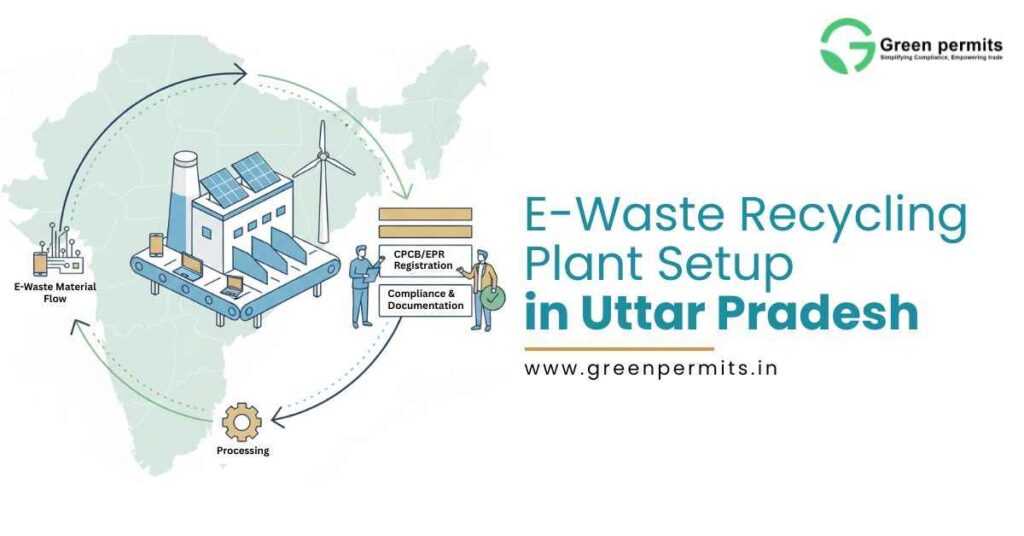
Your plant won’t just recycle—
It becomes part of a national compliance ecosystem where producers must purchase legally recognized EPR certificates. That means consistent demand, predictable cash flow and high margins for compliant recyclers.
Choosing the right location in UP can define the supply chain strength, operating cost, and procurement efficiency of your plant. Each major city offers unique advantages.
Noida’s corporate parks, data centres, and electronics manufacturing units generate huge quantities of high-quality e-waste—PCBs, servers, laptops, and mobile phones. Startups and established brands alike rely on recyclers to meet yearly EPR targets, creating a strong customer pipeline. Rental rates are higher, but so is the availability of premium waste streams.
Ghaziabad has long been dominated by informal dismantlers and scrap traders. As compliance enforcement tightens, many of these units are transitioning to formal recycling or becoming suppliers to registered facilities. This makes Ghaziabad one of the best sourcing hubs for recyclers.
Lucknow’s market generates significant e-waste, but competition remains relatively low. This makes it a strong location for 1–2 TPD plants. Logistics connectivity also allows founders to aggregate waste from surrounding districts.
Kanpur’s industrial and educational ecosystem ensures steady availability of mid-to-high grade e-waste. The city is ideal for mixed operations like dismantling, recycling and refurbishing.
Successful recyclers know that raw material security is the real heart of this business. Uttar Pradesh offers multiple stable supply channels:
The NCR–UP belt has thousands of small collectors who funnel e-waste into large scrap hubs. For a registered recycler, these unorganized flows are an opportunity. Once your plant is operational and compliant, suppliers prefer selling to you because they receive stable rates, timely payments and documentation support.
A 1 TPD plant needs only 25–30 MT of waste per month. UP’s reverse logistics ecosystem can supply multiples of this comfortably—ensuring uninterrupted production.
Getting the right approvals is not difficult if approached methodically. What slows most founders down is a lack of clarity on what regulators expect. Here’s the streamlined version of the compliance path for Uttar Pradesh.
CTE is the first approval that allows you to construct and install machinery. It requires details of land, process flow, pollution control systems, and facility layout. A well-prepared application shortens approval time dramatically.
Registration on the national EPR portal is mandatory for issuing EPR certificates. Regulators today focus heavily on documentation accuracy—process flow diagrams, machinery photos, geo-tagged videos, and genuine capacity details. A strong application not only ensures approval but also prevents disputes later during audits.
This authorization validates that you are equipped to handle hazardous fractions safely. It typically includes details of waste storage, disposal partners, and pollution control systems.
After the plant is installed and inspected, you receive CTO. This is your operational license, allowing the unit to start recycling and issue EPR certificates.
Practical Insight
The biggest mistake new founders make is applying for licenses without facility readiness. Regulators increasingly check for consistency between claims and reality—floor area, machinery capacity, and workflow. Ensure your paperwork matches your actual setup.
UP is a capital-efficient state for e-waste recycling. Costs vary depending on machinery quality, automation level and plant location.
A 1 TPD plant typically requires:
| Component | Cost (₹ lakh) |
|---|---|
| Industrial shed (lease/rent) | 20–40 |
| Civil setup & electrical work | 15–25 |
| Dismantling tools & stations | 8–15 |
| Primary shredder | 15–30 |
| Magnetic & eddy separators | 5–10 |
| Fumes & dust control systems | 5–8 |
| Licensing & compliance costs | 2–4 |
| Working capital buffer | 8–12 |
Total investment: ₹75 lakh – ₹1.3 crore
A 3–5 TPD facility will cost between ₹2 crore and ₹4.5 crore depending on recovery efficiency goals. Automated separation lines significantly improve yield, especially for copper, aluminium, and precious metal-bearing fractions.
Founder Insight
If your plant is strategically located near waste sources, logistics savings alone can improve margins by 10–15 percent.
Uttar Pradesh actively promotes recycling and electronics manufacturing. Founders who set up early can access multiple incentives.
Depending on district category, units may receive 25–40 percent subsidy on plant and machinery. This reduces upfront capital pressure and accelerates ROI timelines.
Many industrial zones offer 75–100 percent exemption on stamp duty, a significant cost relief when leasing or purchasing land.
New units employing local youth may be eligible for reimbursement of a portion of the employer’s EPF contribution for three years.
The Noida–Greater Noida–Yamuna Expressway corridor houses India’s largest mobile manufacturing hub. This ecosystem not only supplies high-value e-waste but also creates demand for certified recyclers as brands race to meet EPR targets.
Being situated within or near this corridor can accelerate both procurement and client onboarding.
Recyclers earn from two strong revenue streams:
Every kilogram of key metal recovered generates an EPR certificate. Producers purchase these certificates to meet their targets. This creates a continuous revenue cycle independent of commodity price fluctuations.
Founder Insight
Plants in UP often find themselves oversubscribed during peak compliance months because producers rush to meet annual EPR deadlines. High-capacity recyclers command premium pricing during these periods.
Regulatory compliance is not an administrative formality—it is directly linked to your revenue potential.
Registrations can be revoked if:
A revoked registration not only pauses your operations but also removes your ability to generate EPR certificates until reinstated.
The recycling industry depends on transparent material tracking. Every kilogram processed, sold, or recovered must be accurately recorded. Misreporting creates serious credibility issues with both regulators and producers.
Here is the complete execution roadmap for entrepreneurs planning an e-waste unit in Uttar Pradesh.
Identify land, utility access, workflow layout, and expected waste input.
A well-structured DPR significantly improves approval success.
Submit environmental management plans, machinery lists, and detailed process flow.
Set up dismantling zones, shredding lines, storage areas, and pollution control systems.
Provide compliance documents, factory photos, videos, and machinery evidence.
Validate your ability to handle hazardous substances and dispose of residues safely.
Once the inspector verifies your plant’s readiness, CTO is issued.
Partner with scrap hubs, corporates, IT vendors, refurbishers and district collectors.
Once operational, start processing input waste streams and generating certificates.
| Parameter | Value |
|---|---|
| Annual NCR + UP e-waste volume | 1.4–1.6 lakh MT |
| Installed formal recycling capacity | Less than 25 percent of demand |
| Expected growth rate until 2030 | 14 percent CAGR |
| EPR certificate demand growth | 30–40 percent year-on-year |
| Average ROI for a 3 TPD unit | 18–30 months |
The gap between waste generation and formal processing capacity is widening. Founders who scale early will become preferred partners for producers scrambling for compliant certificate sources.
If you are considering e-waste recycling plant setup in Uttar Pradesh, this is one of the most favourable moments in the industry’s history. Demand for EPR certificates is rising faster than capacity expansion. UP’s cities offer abundant waste, excellent connectivity, and competitive costs. With the right strategy, your plant can achieve profitability within months of becoming fully operational.
Uttar Pradesh is not merely a location—it is a long-term competitive advantage for forward-thinking founders ready to lead India’s recycling revolution.
📞 +91 78350 06182 | 📧 wecare@greenpermits.in
Book a Consultation with Green Permits