
A Delhi-based importer recently shared a familiar story. His shipment from China had landed on time, buyers were waiting, payments were lined up — and then customs asked for one document he didn’t have: BIS certification. What followed were port delays, mounting demurrage charges, and a costly lesson that many Indian importers learn the hard way.
If you’re importing products from China, BIS certification isn’t just a regulatory checkbox. It directly decides whether your goods clear customs smoothly or get stuck indefinitely. This guide explains everything you need to know — clearly, practically, and from a business owner’s point of view.
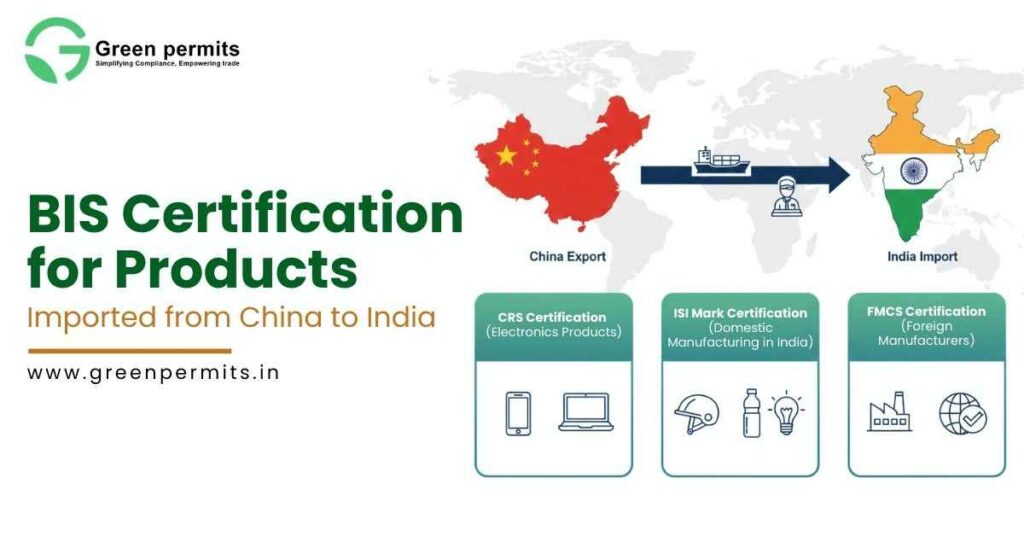
BIS (Bureau of Indian Standards) certification confirms that a product complies with Indian safety, quality, and performance standards. For notified products, BIS approval is mandatory before import, regardless of the country of origin.
For Chinese imports, BIS scrutiny is stricter because:
Business relevance:
Without BIS certification, customs clearance is blocked, sales timelines collapse, and compliance risks multiply.
Not all products need BIS certification — but many high-volume categories do. The confusion usually arises because importers assume international certifications are enough. They aren’t.
Once a product falls under a notified BIS standard, importing without approval becomes a legal violation.
Understanding the right BIS scheme is crucial. Applying under the wrong route is a common cause of rejection.
| BIS Scheme | Who It Applies To | Typical Products |
|---|---|---|
| CRS (Compulsory Registration Scheme) | Electronics & IT goods | Mobile phones, power adapters |
| ISI Mark Scheme | Electrical & industrial goods | Switches, cables, appliances |
| FMCS (Foreign Manufacturer Certification Scheme) | Overseas factories (China) | Factory-manufactured goods |
What importers must note:
For most Chinese manufacturers, FMCS is unavoidable, and it includes factory audits outside India.
Indian customs works in coordination with BIS. If a notified product arrives without certification, clearance stops immediately.
An importer of electronic chargers imported from Guangzhou assumed CRS could be handled post-arrival. Customs detained the shipment for over a month. The importer paid more in port charges than the product margin itself.
Key takeaway:
BIS certification must be completed before shipping, not after.
While the exact steps vary by product and scheme, the core process follows a predictable path.
| Document | Provided By |
|---|---|
| Product technical specifications | Manufacturer |
| Test samples | Manufacturer |
| Factory quality manuals | Manufacturer |
| Authorization letter | Indian importer |
| IEC, GST | Importer |
Delays often happen when manufacturers are unfamiliar with Indian documentation expectations.
Many importers lose time by applying under the wrong scheme.
| Situation | Correct BIS Route |
|---|---|
| Importing electronics like adapters | CRS |
| Importing electrical appliances | ISI |
| Manufacturing unit located in China | FMCS |
Practical insight:
If the factory is outside India and the product requires ISI marking, FMCS is mandatory, regardless of who the importer is.
Planning BIS early helps avoid inventory and cash-flow disruptions.
| Stage | Estimated Time |
|---|---|
| Product testing | 2–3 weeks |
| Documentation review | 1–2 weeks |
| Factory audit (if applicable) | 3–6 weeks |
| BIS approval | 1–2 weeks |
Average total duration: 6–10 weeks
Trying to cut costs often leads to longer delays and reapplications.
Most BIS-related problems are avoidable.
Consultant insight:
BIS is not paperwork-only compliance. It’s a technical + procedural process, and small gaps cause major setbacks.
Green Permits works closely with Indian importers and Chinese manufacturers to manage BIS compliance end-to-end.
Our approach focuses on predictable timelines, zero rework, and smooth customs clearance.
Ignoring BIS certification doesn’t save money — it shifts the cost to demurrage, penalties, lost sales, and reputational risk. Importers who plan compliance early move goods faster, sell confidently, and scale without regulatory shocks.
If you’re importing from China, BIS certification should be part of your import strategy, not an afterthought.
📞 +91 78350 06182
📧 wecare@greenpermits.in
Book a Consultation with Green Permits