
A mid-sized manufacturer from Gujarat once explored setting up a plastic recycling unit after seeing strong demand from FMCG brands. Machinery was finalised, land was leased, and even buyers were lined up. But one missing piece delayed everything — EPR registration. Without it, no brand was willing to buy recycled output or certificates.
This is the new reality. Under India’s updated EPR framework, recycling is no longer just about processing waste — it’s about regulatory eligibility. Those who understand this early are building stable, scalable businesses. Those who don’t are stuck with idle plants and blocked revenue.
This blog explains where the real recycling opportunities lie under EPR, how the rules impact profitability, and what businesses must plan before entering this space.
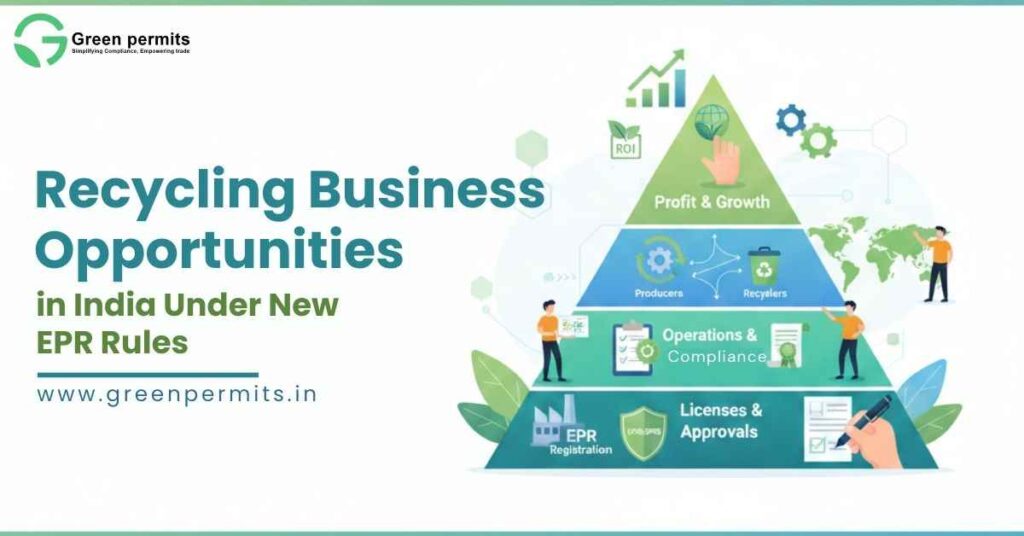
Extended Producer Responsibility (EPR) legally shifts the responsibility of waste collection and recycling to producers, importers, and brand owners. These entities must meet yearly recycling targets and can only do so through registered recyclers.
Earlier, recycling demand was informal and inconsistent. Today, EPR has created structured, compulsory demand.
Under EPR:
This has transformed recycling from a volume-driven activity into a compliance-backed business model. The focus has moved from “how much waste you collect” to “how compliant and verifiable your operations are.”
Plastic waste recycling remains the largest entry point under EPR, mainly due to FMCG, packaging, and consumer goods companies.
Most EPR demand comes from:
These companies have recurring annual targets, which means repeat demand for compliant recyclers.
Plastic recycling is often preferred by first-time entrepreneurs because:
However, compliance discipline is critical. Even small documentation gaps can lead to portal rejections or certificate withholding.
E-waste recycling operates in a more regulated and inspection-heavy environment. It includes electronics, IT equipment, consumer appliances, and components.
E-waste recyclers benefit from:
Unlike plastic, EPR certificates here are linked to material recovery, not just processing volume. This increases value but also scrutiny.
E-waste recycling requires:
Businesses that plan compliance alongside plant design perform far better than those who retrofit compliance later.
Battery recycling, especially lithium-ion batteries, is becoming one of the most attractive recycling segments in India.
Growth drivers include:
Battery recycling is not just a waste solution anymore — it is becoming a strategic supply chain activity.
Battery recycling comes with:
Because the number of compliant recyclers is still limited, early movers with proper approvals enjoy better pricing and long-term contracts.
| Recycling Segment | Capital Requirement | Compliance Intensity | Certificate Demand | Scalability |
|---|---|---|---|---|
| Plastic Waste | Low to Medium | Medium | High | Medium |
| E-Waste | Medium to High | High | Medium to High | High |
| Battery Waste | High | Very High | Very High | Very High |
What this means for investors:
Plastic recycling offers faster entry, while e-waste and battery recycling offer stronger long-term positioning for compliance-ready businesses.
Many entrepreneurs assume revenue comes only from waste processing. Under EPR, that is incomplete.
A compliant recycler:
For many recyclers, certificate sales become more predictable than raw material margins.
Before operations begin, recyclers must align approvals carefully.
Key requirements include:
Skipping or delaying any approval often leads to months of lost revenue, even if the plant is operational.
A recycler from North India had buyers ready but faced certificate suspension due to mismatched capacity data between CTO and EPR portal entries. The issue took months to resolve.
Under EPR, compliance failures directly affect cash flow, not just legal standing.
Businesses that complete EPR registration early benefit from:
Late entrants often struggle with price competition and tougher scrutiny.
India’s recycling sector has matured. Growth is no longer driven by scale alone but by regulatory readiness and operational transparency.
Under the new EPR rules:
Businesses that plan compliance from day one build sustainable, scalable recycling operations.
📞 +91 78350 06182
📧 wecare@greenpermits.in
Book a Consultation with Green Permits
We help you: