
In late 2024, a mid-sized auto component manufacturer expanded production to meet a new OEM contract. Machines were installed, manpower hired, and dispatch schedules fixed. Everything looked perfect—until the SPCB flagged a mismatch between the CTO capacity and updated production data on the CPCB portal.
What followed were inspection notices, delayed renewals, and a temporary halt on operations.
This is exactly how regulatory trends are playing out today—and 2026 will intensify this pattern. Regulations are no longer static rules. They are live systems tracking how manufacturers operate daily.
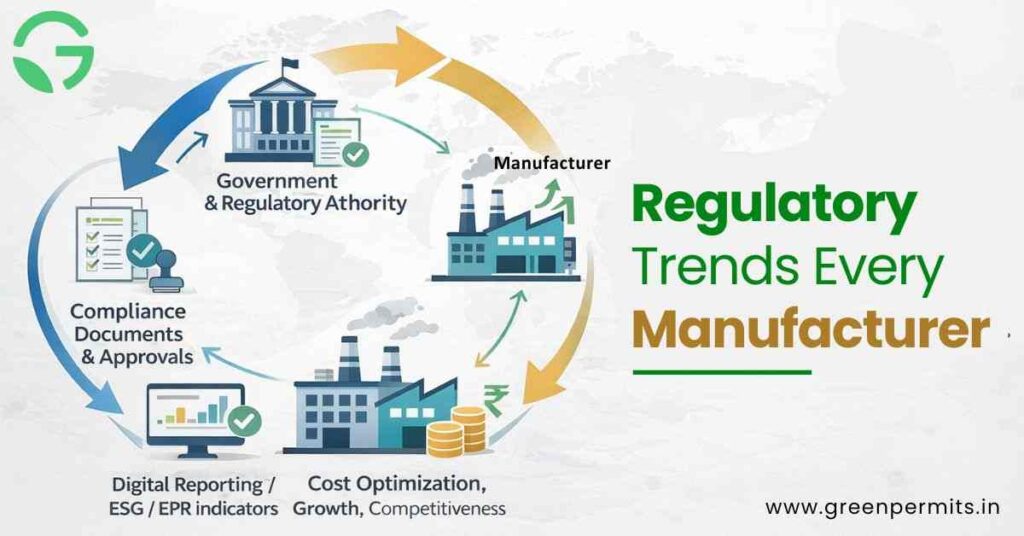
By 2026, Indian manufacturing will operate in an environment where:
Manufacturers who plan compliance early will scale smoothly. Those who react late will face avoidable costs, operational disruptions, and credibility risks.
Extended Producer Responsibility (EPR) is becoming one of the most important regulatory trends for manufacturers in India in 2026.
Even manufacturers who do not sell finished consumer products may fall under EPR due to:
Business impact:
Incorrect or delayed EPR registration can block sales, imports, and even contract renewals.
One of the biggest regulatory shifts heading into 2026 is fully digital enforcement.
A packaging unit recently lost three weeks during renewal because the factory address on GST differed slightly from the SPCB consent address. No violation—just inconsistency.
What this means:
Accuracy will matter more than explanations.
CTE and CTO approvals are no longer one-time milestones. In 2026, regulators will treat them as dynamic permissions.
Many manufacturers expand capacity but forget to:
Result: Delayed renewals or suspension notices.
Environmental, Social, and Governance (ESG) compliance is quickly moving beyond annual reports.
Export-oriented manufacturers are already being asked for:
Reality check:
ESG is becoming a business qualification, not just a branding exercise.
| Compliance Area | What Happens If Ignored |
|---|---|
| EPR registration | Sales and imports restricted |
| Consent renewal | Production stoppage |
| Data mismatch | Inspection notices |
| ESG gaps | Loss of large contracts |
Interpretation:
Non-compliance is no longer a legal issue alone—it’s a business continuity issue.
A machinery manufacturer in Maharashtra planned EPR and consent updates six months before expansion. While competitors faced delays during audits, their approvals went through without disruption.
Early compliance leads to:
Regulatory trends for manufacturers in India in 2026 clearly point in one direction—proactive compliance wins.
Manufacturers who:
Will grow without disruption.
Those who ignore these trends will constantly firefight compliance issues.
📞 +91 78350 06182
📧 wecare@greenpermits.in
Book a Consultation with Green Permits
We help manufacturers stay compliant with EPR, environmental approvals, ESG, and regulatory planning—before issues arise.