
For many business owners in Rajasthan, tyre waste is not something they plan for. It quietly accumulates behind transport yards, workshops, mining sites, and depots. Initially, it seems manageable. Over time, storage space shrinks, fire risk increases, and informal scrap channels become unreliable. Eventually, regulatory scrutiny begins.
At the same time, organized industries like cement plants and rubber manufacturers are actively looking for compliant tyre-derived materials. This shift has turned tyre waste into a regulated industrial input. Setting up a tyre waste recycling plant in Rajasthan is now less about scrap trading and more about structured compliance-backed manufacturing.
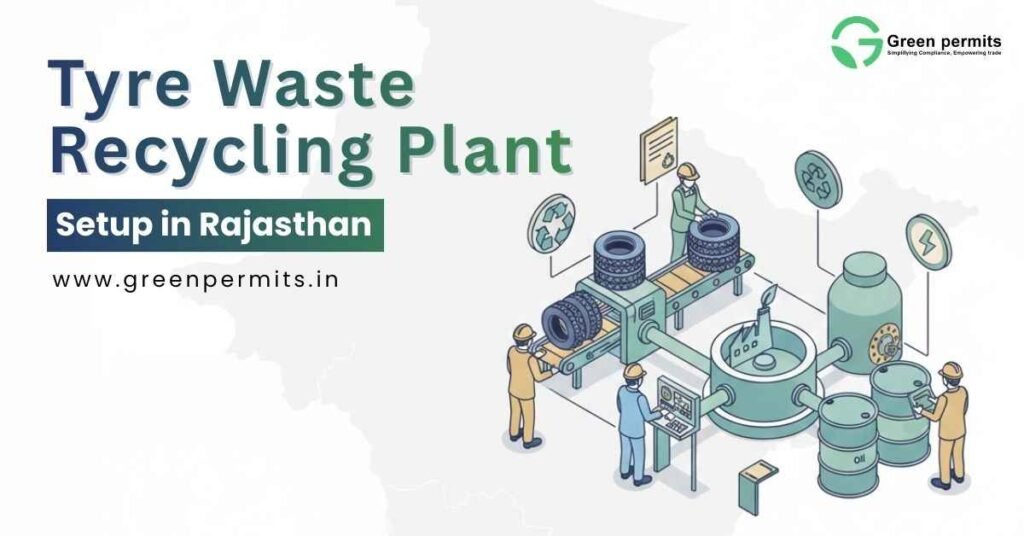
Rajasthan’s industrial profile makes it naturally suited for tyre recycling. The state supports long-distance transport, heavy mining activity, large cement manufacturing clusters, and growing logistics infrastructure. Each of these sectors contributes consistently to tyre waste generation.
From a recycler’s business perspective, this creates stability. Unlike seasonal scrap, tyre waste flows year-round. Transport fleets replace tyres on fixed schedules, mining equipment generates heavy-duty tyre waste, and highway traffic ensures constant turnover.
Additionally, Rajasthan’s regulatory push toward organized waste management has reduced tolerance for informal disposal. This transition favors licensed recyclers who can offer traceability, safety, and environmental compliance—making the business more resilient over time.
Location planning is one of the most underestimated decisions in tyre recycling projects. The wrong location increases logistics cost, delays approvals, and complicates inspections.
Jaipur offers a strong ecosystem for recyclers who want proximity to transport operators, workshops, and service hubs. It also provides better access to skilled technicians and vendors.
Alwar and Neemrana are ideal for businesses targeting both Rajasthan and NCR. High vehicle density ensures tyre availability, while industrial zoning simplifies approvals.
Jodhpur is particularly suitable for units focusing on mining and heavy vehicle tyres. The size and durability of these tyres make them valuable for shredding and fuel recovery.
Kota and Chittorgarh stand out due to nearby cement plants. Locating close to end-users reduces freight costs and strengthens long-term supply contracts.
Choosing notified industrial land helps avoid land-use disputes and shortens approval timelines.
End-of-life tyre sourcing is not just about availability—it is about consistency and documentation. Many new recyclers assume tyre waste will always be available locally, only to realize later that sourcing becomes competitive.
Organized sourcing channels such as fleet operators and mining contractors provide predictable volumes. These entities prefer recyclers who can lift waste regularly and provide basic compliance documentation.
Unorganized sources like workshops and dealers add flexibility but require more coordination. Storage norms and fire safety expectations also become stricter as volume increases.
From a regulatory viewpoint, recyclers are expected to show inward records that match their approved capacity. Discrepancies between sourcing volume and plant capacity often trigger inspection queries.
Tyre recycling plants fall under strict environmental oversight because of emissions, fire hazards, and waste residue management. Approval planning must be treated as a project phase, not a formality.
Consent to Establish defines what you are allowed to build. Any deviation during installation can create issues later. Consent to Operate validates that your plant matches what was approved earlier.
Hazardous waste authorization becomes relevant when dealing with by-products like oil residue or carbon-rich outputs. Fire safety clearance is equally critical, as tyre storage is classified as high-risk.
| Stage | What Authorities Usually Check |
|---|---|
| CTE stage | Land zoning, layout, capacity, pollution controls |
| Installation | Machinery alignment with approvals |
| CTO stage | Safety systems, storage, emissions readiness |
Projects fail not because approvals are denied, but because planning does not match execution.
Investment decisions should balance capacity with market demand and compliance cost. Over-investing without buyers strains cash flow, while under-investing causes approval limitations.
Shredding-only plants require lower capital but depend heavily on crumb rubber buyers. Integrated shredding and pyrolysis units have higher investment but diversified revenue streams.
Beyond machinery, significant costs arise from:
Ignoring these elements at the budgeting stage often leads to cost overruns during approval.
Rajasthan promotes manufacturing and recycling, but incentives are structured around compliance and operational continuity. Many units lose benefits simply because filings are delayed or approvals lapse.
Land-related incentives reduce upfront capital burden, especially in industrial zones. Tax-related reimbursements improve long-term cash flow but depend on accurate reporting.
Power subsidies and MSME benefits help operational sustainability, especially during the initial years. However, incentives are rarely granted retroactively if compliance gaps exist.
Treat incentives as a reward for discipline, not a substitute for planning.
The strength of tyre recycling lies in diversified demand. Relying on a single buyer exposes the business to price volatility.
Cement plants use tyre-derived fuel to reduce fossil fuel dependency. These buyers prioritize consistent quality and compliance over lowest price.
Rubber manufacturers value crumb rubber for blending and molded products. Steel wire recovery adds supplementary income but requires proper separation systems.
Pyrolysis oil buyers operate in a regulated environment, making documentation and quality assurance essential for sustained sales.
Most enforcement actions in tyre recycling arise from operational shortcuts rather than deliberate violations. Regulators focus on fire safety, emissions, and capacity adherence.
Common risk triggers include:
Even temporary suspension disrupts supply commitments and damages buyer trust. Compliance, therefore, directly impacts business reputation.
Successful plants treat compliance as an ongoing process, not a one-time milestone.
Tyre waste recycling in Haryana offers strong commercial potential, but only when business planning and regulatory compliance move together. Early approvals, capacity alignment, and disciplined operations protect investment and ensure long-term stability.
+91 78350 06182 | wecare@greenpermits.in
Book a Consultation with Green Permits