
In late 2024, a Nagpur-based auto parts trader, Rajesh, realized that thousands of end-of-life cars and commercial vehicles were arriving at local yards every month — yet no formal RVSF (Registered Vehicle Scrapping Facility) existed within 80–100 km. Buyers were calling him for recycled steel, aluminium, plastics, and spare components, but without a structured plant, he couldn’t meet the demand.
That’s when he discovered how Maharashtra’s auto corridor, policy incentives, and new scrappage norms could turn a compliance requirement into a high-margin business opportunity.
This blog walks you through the same journey — from choosing the right MIDC zone to completing MoRTH and PCB approvals — so you can set up a compliant and profitable vehicle scrapping plant in Maharashtra.
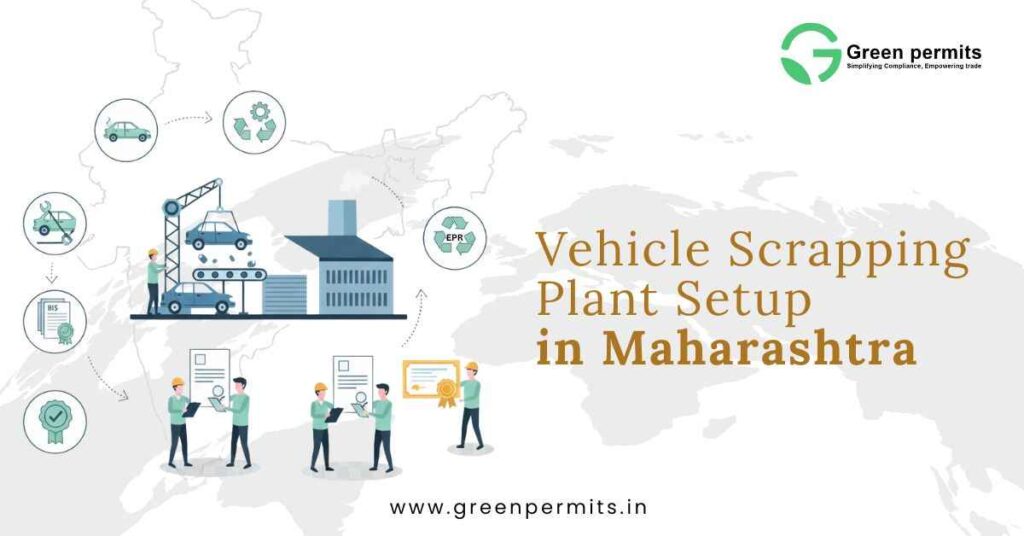
Maharashtra has one of India’s highest vehicle populations, making it a strategic hub for RVSF units.
Here’s the context:
For business owners, this means predictable demand, steady inflow of end-of-life vehicles, and strong resale markets for recovered materials.
Before shortlisting land, business owners should understand that an RVSF must comply with zoning standards, pollution norms, and access to transport routes. Maharashtra’s MIDC zones are ideal because they already fall under industrial use.
Suitable MIDC clusters include:
A business in Pune’s Chakan cluster, for example, cut inbound logistics cost by nearly 20% simply because surrounding districts already had ageing commercial fleets ready for scrapping.
The Mumbai–Pune expressway region has consistent availability of:
This supply chain benefits RVSFs through:
A recycler operating near Khopoli shared that material recovery from just 200 cars per month covered nearly 70% of their operating expenses.
Setting up an RVSF requires compliance with central and state-level authorities.
Here’s a simplified explanation.
A Mumbai-based operator faced a 4-month delay because their effluent layout didn’t match PCB’s approved engineering drawing — emphasizing the need for exact technical documentation.
Once permissions are underway, machinery planning becomes critical.
A compliant RVSF must follow a sequential process:
A Pune operator installed a basic belted conveyor line and doubled throughput within 3 months — significantly improving material recovery efficiency.
Below is a realistic cost structure based on typical RVSF setups in Maharashtra.
| Component | Cost Range (₹ Lakhs to Cr) |
|---|---|
| Land (1–2 acres, MIDC lease) | 60–150 lakhs |
| Civil works & sheds | 40–70 lakhs |
| Depollution machinery | 35–55 lakhs |
| Dismantling line | 30–50 lakhs |
| Shredder + shear baler | 1.2–3.5 crore |
| IT, CCTV, Vahan integration | 10–15 lakhs |
| Licensing & consulting | 8–20 lakhs |
| Working capital (initial) | 20–40 lakhs |
Interpretation:
Machinery and land account for nearly 70% of total CAPEX, making accurate land selection critical.
| Expense | Monthly (₹ lakhs) |
|---|---|
| Skilled labour & staff | 6–9 |
| Electricity | 2–5 |
| Waste disposal (hazardous fluids, airbags) | 1–2 |
| Lease rent (MIDC) | 1–3 |
| Maintenance | 2–4 |
| Admin + compliance | 1–2 |
Interpretation:
Labour and electricity form the majority of operational expenses; automation reduces cost over time.
Maharashtra encourages recycling, sustainability, and circular economy projects.
Eligible benefits include:
For plants in backward regions like Vidarbha or Marathwada, incentives can significantly improve payback periods.
Typical inflow sources for RVSFs include:
Each category offers different revenue strengths — for example, commercial fleets provide consistent monthly volume.
The policy mandates:
A western India yard lost its application because it stored depolluted fuels in non-authorized drums. Proper hazardous waste storage is mandatory, and deviations can lead to suspension.
A clear roadmap ensures smooth execution.
6–9 months, depending on land approvals and machinery readiness.
Setting up a vehicle scrapping plant in Maharashtra is both an environmental responsibility and a strong business opportunity. The state’s industrial infrastructure, vehicle density, and policy incentives make it one of India’s best markets for RVSFs.
Early compliance, correct documentation, and smart land selection not only avoid delays but also reduce operational stress and improve profitability.
If you’re planning a scrapping facility, getting expert help during permissions and layout planning can save months of back-and-forth with authorities.
Green Permits helps manufacturers, recyclers, and entrepreneurs navigate all compliance requirements — MoRTH licensing, PCB approvals, plant layout, documentation & machinery planning.
📞 +91 78350 06182
📧 wecare@greenpermits.in