
A transport business owner recently shared a concern that many fleet operators quietly face: “My trucks are aging, maintenance costs are rising, and fitness renewals are getting harder. I know scrapping is inevitable — but I don’t understand the compliance or the business side of it.”
On the other end of the spectrum, a first-time entrepreneur asked, “If scrapping is becoming mandatory, can this actually be a scalable business in 2025?”
These questions reflect where India stands today. Vehicle Scrapping Policy 2026 is no longer just a regulatory announcement — it’s a structural shift creating both pressure and opportunity.
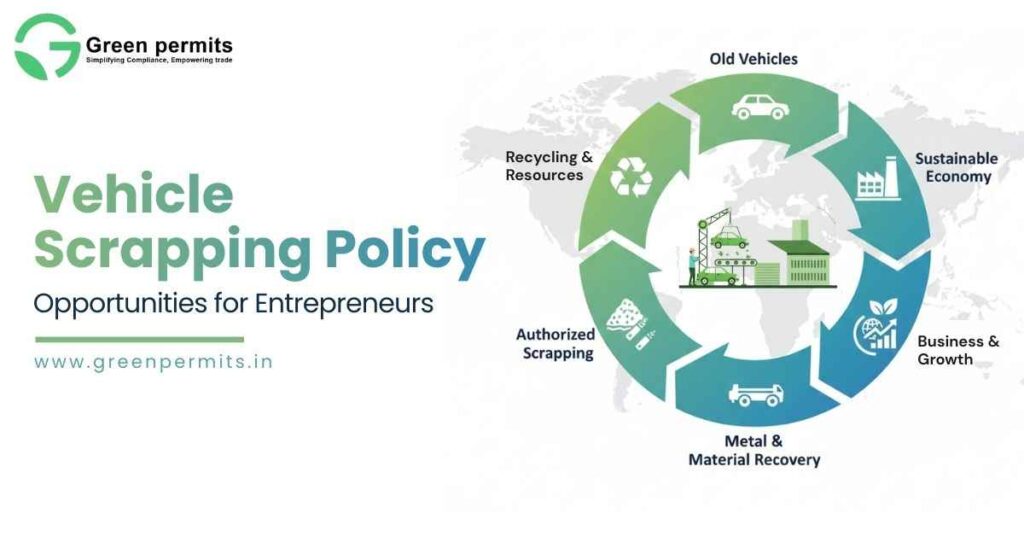
The Vehicle Scrapping Policy 2025 aims to systematically remove old, unsafe, and polluting vehicles from Indian roads and route them through authorized, traceable scrapping and recycling systems.
Unlike earlier informal scrapping practices, this policy brings:
For businesses, this means scrapping is no longer an unorganized activity. It has become a regulated industry with defined entry rules, compliance checkpoints, and long-term visibility.
This policy directly affects both vehicle owners and new-age entrepreneurs.
From a business owner’s perspective:
From an entrepreneur’s perspective:
In simple terms, the policy converts risk into opportunity — but only for compliant businesses.
India has one of the world’s largest aging vehicle populations. The scrapping policy converts this challenge into a structured recycling market.
| Vehicle Segment | Estimated Eligible Vehicles |
|---|---|
| Commercial vehicles (15+ years) | 17 million+ |
| Private vehicles (20+ years) | 25 million+ |
| Total scrapping potential | 40+ million vehicles |
What this means for entrepreneurs:
This is not a one-time wave. It is a 10–15 year opportunity cycle, driven by regulation, not consumer preference.
Vehicle scrapping is not a single business model. It is a value chain with multiple entry points.
Each model differs in capital intensity and licensing complexity. However, every model requires environmental compliance and traceability, which acts as a natural entry barrier.
RVSF registration is the backbone of legal vehicle scrapping in India.
Many applicants fail not because of capital shortage, but because documentation, layout planning, and sequencing are misunderstood.
A common misconception is that vehicle scrapping is “easy money.” In reality, it is capital-intensive but stable when done correctly.
| Parameter | Approximate Range |
|---|---|
| Initial investment | ₹4–7 Crore |
| Setup timeline | 6–9 months |
| Annual revenue potential | ₹6–10 Crore |
| Profit margin | 18–25% |
Business insight:
Delays in approvals, poor layout planning, or weak compliance systems can stretch break-even timelines significantly.
Vehicle scrapping is closely monitored due to environmental and safety risks.
Several small units have faced temporary shutdowns due to missing PCB permissions — resulting in revenue loss that far exceeded compliance costs.
In this sector, compliance is not paperwork. It is business continuity.
An entrepreneur in western India invested time in approvals before purchasing heavy machinery. While competitors rushed to set up plants, his facility became operational first — fully compliant.
Within the first year:
The takeaway is simple: early compliance creates long-term leverage.
Vehicle scrapping is increasingly linked with ESG commitments.
Entrepreneurs who align operations with sustainability standards attract long-term corporate partnerships, not just walk-in scrap volumes.
Green Permits helps businesses move from idea to operation without regulatory stress.
Vehicle Scrapping Policy 2025 is reshaping India’s automotive and recycling landscape.
Those who treat it as a short-term opportunity risk compliance failure.
Those who approach it as a regulated, long-term business build sustainable profitability.
The difference lies in planning, approvals, and execution — not just investment.
📞 +91 78350 06182 | 📧 wecare@greenpermits.in
Book a Consultation with Green Permits