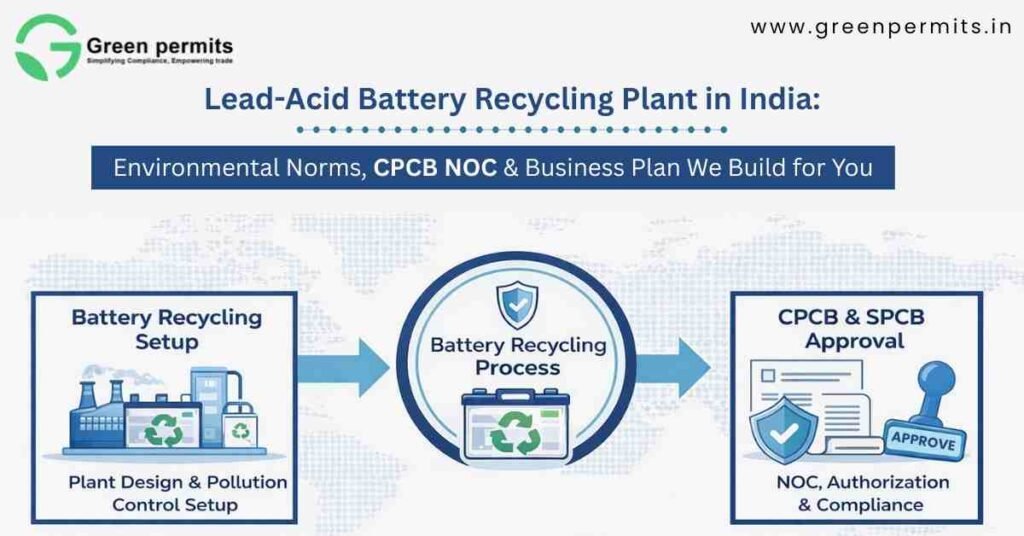
Lead-Acid Battery Recycling Plant in India: Environmental Norms, CPCB NOC & Business Plan We Build for You
A mid-sized automotive battery company in Maharashtra invested nearly ₹8 crore in a recycling unit but failed to secure CPCB authorization before commissioning. Within 60 days, the State Pollution Control Board issued a closure notice, citing violation of hazardous waste norms. The plant remained shut for over 6 months, leading to working capital blockage and loss of contracts.
This is not an isolated case. In India, battery recycling falls under high-risk environmental category, and even minor compliance gaps can trigger operational shutdown, penalties, and legal exposure.
Introduction
Lead-acid battery recycling is one of the most regulated industrial activities in India due to the presence of lead (Pb), sulfuric acid, and toxic emissions. India generates an estimated 3.5–4 million tonnes of battery waste annually, and over 85% of lead demand is met through recycling.
To regulate this sector, the government has introduced a strict compliance framework under:
CPCB Extended Producer Responsibility (EPR) system
For any entrepreneur or company, setting up a recycling plant without understanding these frameworks is a direct business risk.
Regulatory Framework for Lead Acid Battery Recycling Plant
A lead-acid battery recycling plant is governed by multiple environmental laws, each targeting a specific aspect of pollution control, waste handling, and accountability.
The regulatory system is designed to ensure that lead recovery is traceable, emissions are controlled, and waste is scientifically managed.
Key Regulatory Requirements
Battery Waste Management Rules mandate EPR compliance for producers and recyclers
Hazardous Waste Rules classify battery waste as toxic and controlled material
Air & Water Acts regulate emissions and discharge standards
CPCB portal ensures centralized monitoring and reporting
Practical Implications for Businesses
Most companies underestimate that approvals are not just documentation-based. Authorities evaluate:
Plant layout and pollution control systems
Waste handling process and storage capacity
Technical capability for safe lead recovery
Failure at any stage can delay approvals by 30 to 90 days, impacting project timelines.
CPCB Registration and Approval Process
The approval process for a recycling plant is sequential and involves multiple authorities. Any deviation or incomplete documentation can result in rejection or prolonged delays.
A typical project takes 120 to 180 days from planning to final approval.
Step-by-Step Approval Flow
Project planning and feasibility study
Consent to Establish (CTE) from SPCB
Plant construction and machinery installation
Consent to Operate (CTO) after trial run
CPCB registration and EPR integration
Key Timelines and Expectations
CTE approval: 30–60 days
CTO approval: 30–45 days
CPCB registration: 30–45 days
Common Reasons for Rejection
Incomplete pollution control design
Incorrect waste storage plan
Missing hazardous waste authorization
Mismatch in plant capacity and documentation
Businesses must ensure documentation accuracy because even small errors can delay approvals by 2–3 months.
EPR Compliance Mechanism for Battery Recycling
The Extended Producer Responsibility (EPR) system is the backbone of battery recycling compliance in India. It shifts the responsibility of waste management to producers while integrating recyclers into the compliance chain.
How the System Works
Producers introduce batteries into the market
Recyclers process waste batteries
Recyclers generate EPR certificates based on recovered lead
Producers purchase certificates to meet compliance targets
Key Data Points for Lead-Acid Batteries
Lead content: 60–80% of battery weight
Recycling efficiency: 90%+ in organized sector
EPR compliance measured in kilograms of recovered metal
Companies that fail to meet EPR obligations may face:
Increased liability in next financial year
Suspension of CPCB registration
Financial penalties and compliance notices
Plant Setup Requirements and Technical Planning
Setting up a lead-acid battery recycling plant requires detailed technical planning, especially in terms of capacity, utilities, and environmental safeguards.
Capacity and Infrastructure Planning
Small scale: 5–10 MT/day
Medium scale: 20–50 MT/day
Large scale: 100+ MT/day
Land requirement: 1–3 acres
Power requirement: 200–500 kW
Water consumption: 20–50 KL/day
Core Plant Components
Battery breaking and separation unit
Lead smelting furnace
Refining and casting system
Acid neutralization plant
Air pollution control devices
Investment Estimates
Small plant: ₹3–5 crore
Medium plant: ₹8–15 crore
Large plant: ₹20–30 crore
Key Planning Considerations
Proper zoning and layout approval
Installation of pollution control equipment
Compliance with hazardous waste storage norms
Poor planning can increase project cost by 15–25% due to redesign and re-approval requirements.
Environmental Norms and Pollution Control Requirements
Lead recycling is classified under Red Category industries, which means strict environmental monitoring is mandatory.
Pollution Control Requirements
Installation of scrubbers and bag filters
Lead emission control within permissible limits
Acid neutralization before disposal
Zero Liquid Discharge (ZLD) recommended
Waste Management Categories
Lead slag and residues
Acid electrolyte waste
Plastic casing waste
All waste streams must be:
Stored in designated hazardous zones
Transported through authorized handlers
Disposed or recycled through registered facilities
Monitoring and Compliance
Authorities conduct inspections to verify:
Emission levels
Waste handling practices
Worker safety measures
Non-compliance can result in immediate suspension of operations.
Compliance Risks and Penalties
Environmental compliance failures are treated seriously under Indian law, especially for hazardous industries like battery recycling.
Major Risks Businesses Face
CPCB registration rejection
SPCB consent cancellation
Environmental compensation charges
Production halt and sealing of plant
Financial and Legal Impact
Penalty up to ₹1 lakh per day
Additional compensation based on pollution damage
Possible imprisonment under EPA 1986
Operational Consequences
Supply chain disruption
Loss of customer contracts
Increased compliance cost
Even a 30-day shutdown can result in losses of ₹50 lakh to ₹2 crore, depending on plant size.
Why Early Compliance Matters
In the recycling sector, compliance is not a post-setup activity. It directly impacts project feasibility, timelines, and profitability.
Key Benefits of Early Compliance
Faster approvals and reduced delays
Lower project cost and risk
Smooth plant commissioning
Long-term operational stability
Business Reality
Companies that plan compliance from day one typically complete approvals 30–40% faster than those who do it later.
Conclusion
Setting up a Lead Acid Battery Recycling Plant in India requires a structured approach combining technical planning and regulatory compliance.
From CPCB authorization to EPR certificate management, every stage must be executed with precision. The cost of non-compliance is significantly higher than the cost of proper planning.
Businesses that align early with environmental norms not only avoid risks but also build a scalable and sustainable operation in a highly regulated industry.