
When MedNova HealthTech Pvt Ltd, a Bengaluru-based med-tech startup, imported its first batch of blood-pressure monitors, it expected smooth customs clearance. Instead, the shipment was held for over three weeks — all because the team had skipped CDSCO registration, assuming their product was “too simple” to require it.
By the time the devices cleared, the company had lost a hospital supply contract and paid nearly ₹80,000 in demurrage fees. That single delay became a turning point — the founders vowed never to underestimate compliance again.
If you’re building or importing any medical device in India, understanding CDSCO registration can save you time, money, and reputation. This article walks you through the process in plain language — no legal jargon, just practical insights for business owners.
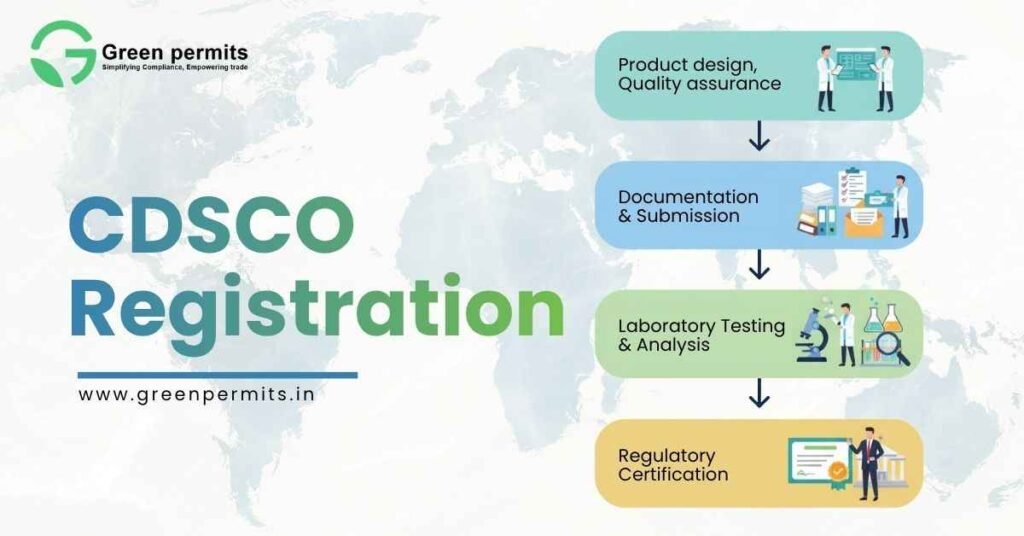
The Central Drugs Standard Control Organisation (CDSCO) regulates medical devices and diagnostics in India under the Medical Devices Rules (2017). Every manufacturer, importer, or distributor must register before placing devices on the Indian market.
Think of CDSCO registration as your product’s official passport — it tells authorities that your device meets India’s safety, performance, and quality standards.
Without it, you risk:
For businesses, this isn’t just paperwork. It’s your ticket to faster approvals, investor confidence, and trust from hospitals and distributors.
Under the Medical Devices Rules, devices are grouped into Class A to D, based on risk level. Each class requires specific CDSCO forms and supporting documents. Knowing your class early helps you avoid mis-filing — one of the most common mistakes startups make.
| Device Class | Risk Level | Common Forms (Examples) | Typical Applicant |
|---|---|---|---|
| Class A | Low (e.g., tongue depressors, surgical dressings) | MD-5 / MD-14 | Manufacturer / Local Agent |
| Class B | Low-moderate (e.g., syringes, suction tubes) | MD-6 / MD-14 | Manufacturer / Importer |
| Class C | Moderate-high (e.g., infusion pumps, ventilator parts) | MD-9 / MD-15 | Importer / Manufacturer |
| Class D | High risk (e.g., cardiac stents, implantable devices) | MD-10 / MD-15 / MD-27 | Manufacturer / Importer |
Why this matters:
Choosing the wrong class can push your application back by weeks. Early classification review — ideally before production or import — ensures smoother evaluation and avoids costly resubmissions.
Even though CDSCO has service-level targets, ground realities vary depending on product complexity, document accuracy, and classification. Here’s what a typical timeline looks like for most applicants:
| Stage | Expected Duration (Business Experience) |
|---|---|
| SUGAM portal sign-up & document verification | ~ 2 weeks |
| Application scrutiny & query resolution | 30 – 45 days |
| Site inspection (if required) | + 2 – 4 weeks |
| Licence approval & issuance | 6 – 12 weeks total |
Insight:
Don’t treat registration as a last-minute step. Build at least two months of buffer into your launch plan, and ensure all documents are notarized or apostilled before uploading.
Many delays stem not from regulation itself, but from missing or mismatched paperwork.
Before starting your online application on the SUGAM portal, prepare the following essentials:
Pro-tip:
Create a shared “submission folder” for your compliance team. Cross-verify all file names and dates before upload; the CDSCO portal rejects mismatched or duplicate documents instantly.
Even seasoned importers get tripped up by seemingly small oversights. The most frequent errors include:
Business insight:
One rejected application can delay your project by up to six weeks. Have a compliance specialist or consultant perform a “pre-flight” audit before submission.
A Pune-based importer submitted an MD-14 form but listed only a generic product name. Customs held their shipment because the individual model numbers didn’t match the invoice. Fixing the paperwork took 15 days and cost the company a client delivery slot.
Lesson: Always verify that every model listed in your shipment appears exactly in your registration documents.
A startup filed a Class B application for a device later re-classified as Class C. The regulator requested new test data, adding an extra month to the review.
Lesson: Consult with experts early to confirm the correct class before submission.
India’s medical-device sector has grown rapidly, touching ₹30,000 crore+ in exports last fiscal year, with imports rising steadily. As trade scales, so does regulatory oversight.
For businesses, strong compliance isn’t red tape — it’s a growth enabler. Companies with valid CDSCO licences enjoy faster customs clearance, eligibility for government tenders, and easier access to hospital procurement chains.
| Indicator | FY Value / Trend |
|---|---|
| Exports of Medical Devices | ~ ₹31,000 crore and rising |
| Imports of Devices | Increased sharply post-pandemic |
| New Domestic Manufacturers (licensed) | Growing year on year |
Takeaway:
Compliance builds trust. Buyers, hospitals, and investors treat registration as proof of reliability and quality control.
Skipping registration or filing incomplete documents can lead to:
A single customs penalty can exceed the total cost of completing CDSCO registration correctly. Prevention is cheaper than cure.
| Week | Key Activities |
|---|---|
| −8 to −4 | Confirm device class; prepare technical file; draft POA; set up SUGAM account |
| −4 to 0 | Submit forms (MD-14 / MD-15 / MD-5 etc.); pay fees; respond to initial queries |
| 0 to +6 | Attend inspection (if applicable); handle clarifications or data requests |
| +6 onwards | Receive licence; update internal records and marketing materials |
Insight:
Treat this as a project plan with clear ownership. Assign one team member to monitor portal updates daily — small alerts often go unnoticed, causing unnecessary delays.
Navigating CDSCO registration doesn’t have to be overwhelming. Green Permits assists businesses at every step — from classification and document prep to final licence approval.
We:
CDSCO registration may seem bureaucratic, but for serious Indian manufacturers and importers, it’s a competitive advantage. It builds brand trust, shortens customs clearance, and signals reliability to partners and investors.
If you plan to launch or import medical devices, take the process seriously — and do it early.
📞 +91 78350 06182 | 📧 wecare@greenpermits.in
Book a Consultation with Green Permits