
A mid-sized electronics importer assumed EPR registration could be completed after launching products in India. Within 30 days of market entry, CPCB flagged the entity for non-compliance. Within another 15 to 20 days, shipments were held at customs and distributors refused onboarding.
This is not an isolated case. Across sectors like electronics, plastics, batteries, and automobiles, recycling compliance has become directly linked to whether a business can operate in India.
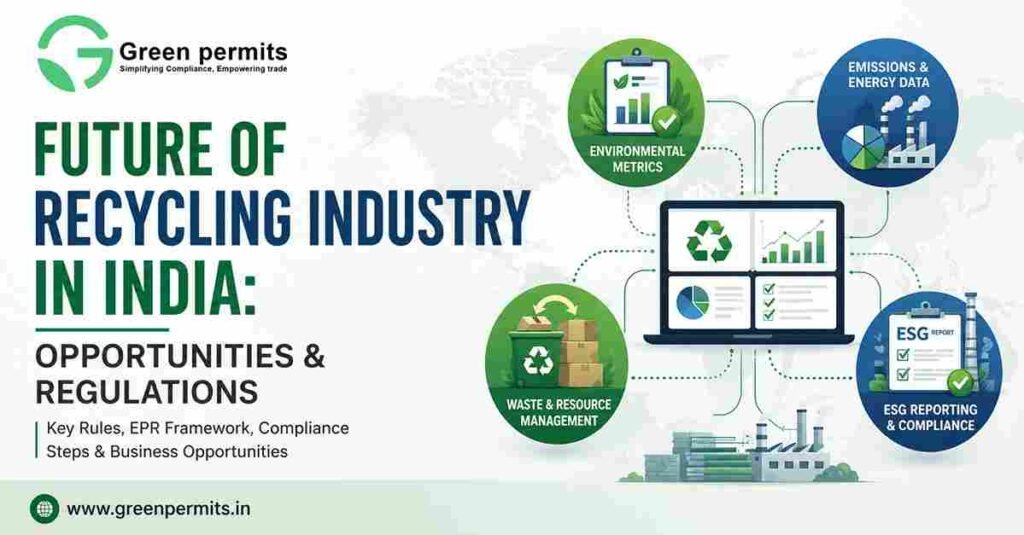
The recycling industry in India is transitioning from an informal, fragmented ecosystem to a structured, compliance-driven sector. This transformation is governed under the Environment Protection Act, 1986 and sector-specific rules that define responsibilities, timelines, and penalties.
Today, multiple regulations operate simultaneously, covering different waste streams and industries. These include E-Waste Rules 2022, Plastic Waste Management amendments 2025, Battery Waste Rules 2022 with 2025 updates, and ELV Rules 2025.
For manufacturers, importers, and brand owners, this means compliance is no longer a backend activity. It is a pre-condition for business continuity, import clearance, and regulatory approvals.
Key regulatory realities businesses must understand:
India is witnessing a sharp increase in waste generation across sectors due to industrial growth, urbanization, and rising consumption. E-waste generation alone exceeds 3.5 million tonnes annually, while plastic waste crosses 9 million tonnes. Battery waste is projected to grow by more than 15 percent annually due to EV expansion.
This growth is not just demand-driven. It is being pushed by regulation, forcing industries to invest in recycling infrastructure and compliance systems.
The recycling sector is expanding due to:
This shift is leading to structural industry changes:
The regulatory ecosystem in India is multi-layered, with each waste category governed by specific rules. These rules define how waste must be collected, processed, reported, and compensated.
The E-Waste Rules establish a structured compliance system where producers are responsible for managing electronic waste generated from their products.
Businesses are required to register on the CPCB portal before initiating any sales or imports. This ensures traceability of products and accountability for waste generation.
The framework operates on lifecycle tracking, where production, sales, and recycling data are monitored continuously.
Key compliance requirements include:
Operational implications for businesses:
The 2025 amendment introduces one of the most significant shifts in plastic waste compliance by focusing on traceability.
From July 2025, all plastic packaging must include barcode or QR code-based tracking. This allows regulators to identify the producer, packaging type, and recycling obligations for every product entering the market.
This system creates complete transparency and eliminates anonymous waste generation.
Key compliance requirements include:
Business impact of this regulation:
Battery waste regulations introduce a measurable and financially linked compliance mechanism.
Unlike traditional reporting systems, compliance here is achieved through the purchase of EPR certificates generated by recyclers based on actual material recovery.
This creates a structured marketplace for compliance.
The system operates on material recovery principles, where recycling output directly translates into compliance credits.
Key compliance requirements include:
Industry trends indicate:
The End-of-Life Vehicles Rules, 2025 establish a structured framework for vehicle recycling in India.
These rules apply to manufacturers, importers, bulk consumers, and scrapping facilities. They introduce phased EPR targets based on financial years.
The targets increase gradually, ensuring long-term compliance planning for producers.
EPR targets defined under the rules:
This means that companies must plan recycling obligations based on production volumes.
Key compliance responsibilities include:
This regulation creates a formal ecosystem for vehicle recycling and material recovery.
The recycling ecosystem is governed by multiple rules that operate simultaneously. Each regulation has specific requirements, deadlines, and risks.
| Regulation | Requirement | Deadline | Applicable To | Risk |
|---|---|---|---|---|
| E-Waste Rules 2022 | Registration and EPR | Before operations | Electronics producers | Business shutdown |
| Plastic Rules 2025 | Barcode and reporting | July 2025 | Brand owners | Penalty |
| Battery Rules 2025 | QR code and certificates | Immediate | Battery producers | Suspension |
| ELV Rules 2025 | EPR targets | Financial year based | Vehicle manufacturers | Compensation |
This regulatory structure ensures that all major waste streams are covered under enforceable compliance systems.
The CPCB centralized portal acts as the backbone of recycling compliance in India. All entities must register, report, and track their compliance through this digital system.
The portal integrates registration, reporting, and certificate management into a single workflow.
The process typically involves multiple stages, starting from account creation to final compliance reporting.
Key steps in the workflow include:
One critical compliance rule is sequential filing.
This makes compliance a continuous activity rather than a one-time process.
Recycling compliance follows a structured timeline that businesses must adhere to throughout the financial year.
Each stage has defined timelines and documentation requirements.
| Step | Authority | Timeline | Documents | Risk |
|---|---|---|---|---|
| Registration | CPCB | 30 to 60 days | GST, PAN, IEC, CIN | Rejection |
| Quarterly filing | CPCB Portal | Every 90 days | Sales data | Portal block |
| Annual return | CPCB | By 30 June | Compliance report | Penalty |
| Certificate purchase | Recycler | Ongoing | EPR certificates | Target failure |
This timeline highlights that compliance must be actively managed across all quarters.
The recycling industry is shifting towards a certificate-based compliance model, which connects producers and recyclers through a financial mechanism.
This system ensures that compliance is based on actual recycling output rather than theoretical estimates.
Recyclers generate certificates based on the quantity of waste processed, and producers purchase these certificates to meet their obligations.
The system is already active across multiple sectors.
Key features of the certificate economy include:
This model is expected to create a multi-crore compliance market over the next 5 to 7 years.
The regulatory push is creating significant business opportunities across the recycling ecosystem.
Companies are now investing in recycling plants, compliance services, and circular economy solutions.
The demand for recycling infrastructure is increasing across multiple sectors.
Typical project requirements vary based on waste type and processing capacity.
Common parameters include:
Sectors with high demand include:
Industries are moving towards circular production models where waste is reused as raw material.
This reduces dependency on virgin resources and improves sustainability metrics.
Companies adopting circular models are seeing measurable benefits.
Key advantages include:
Recycling compliance is now directly linked to ESG reporting requirements.
Companies are required to disclose their environmental performance, including waste management practices.
This is increasing demand for specialized compliance services.
Key requirements include:
Non-compliance in recycling regulations leads to serious operational and financial consequences.
Authorities have introduced strict enforcement mechanisms to ensure adherence.
Businesses must understand that delays or errors in compliance can directly impact operations.
Key risks include:
Legal consequences may also arise under Section 15 of the Environment Protection Act, 1986.
The recycling industry in India is now structured around regulation, accountability, and digital compliance systems.
Businesses that align early with these frameworks benefit from smoother operations and reduced risk. Those who delay face operational disruptions, financial penalties, and regulatory challenges.
Recycling is no longer a backend function. It is a core business requirement that directly impacts growth, compliance, and long-term sustainability.
📞 +91 78350 06182
📧 wecare@greenpermits.in