
Tamil Nadu is one of India’s most industrialized states, with a strong automotive, logistics, and manufacturing base. This industrial density directly contributes to a high volume of end-of-life tyres, making tyre waste recycling a viable and scalable business opportunity. However, success in this sector depends heavily on regulatory planning, location strategy, and correct technology selection.
This guide explains everything businesses need to know before setting up a tyre waste recycling plant in Tamil Nadu.
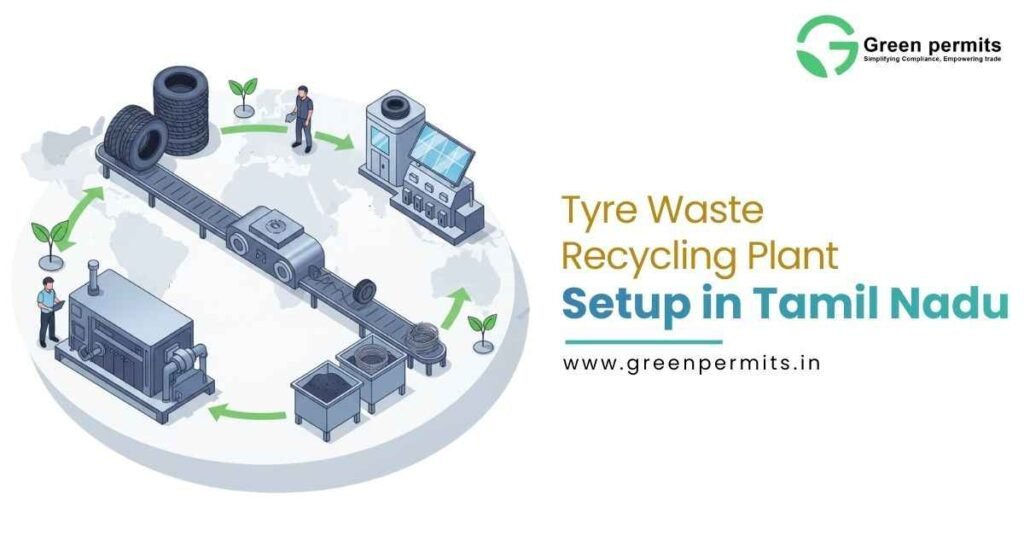
Tamil Nadu consistently ranks among the top automobile-producing states in India. The presence of OEMs, auto ancillary units, transport fleets, and industrial logistics hubs results in continuous tyre replacement cycles.
Key contributors to tyre waste generation include:
For recyclers, this means predictable raw material availability, which is critical for capacity planning and long-term profitability.
Choosing the right location directly impacts approval timelines, logistics costs, and operational efficiency. Tamil Nadu offers multiple industrial regions suitable for tyre recycling projects.
Recommended locations include:
Industrial estates and SIPCOT zones are generally preferred due to better infrastructure and regulatory familiarity.
A major advantage of operating in Tamil Nadu is the diversity of tyre waste sources. End-of-life tyres are generated from multiple sectors, reducing dependency on a single supplier.
Common ELT sourcing channels include:
This diversified supply chain supports both small-scale and large-capacity recycling plants.
Tyre recycling falls under regulated industrial activities and requires multiple statutory approvals before operations begin.
Mandatory approvals include:
Missing or delayed approvals often result in inspection objections, project delays, or operational shutdowns.
Before applying for consents, land suitability must be verified. TNPCB closely reviews zoning and land-use compliance.
Key checks include:
Selecting compliant land at the beginning prevents rejections at the consent stage.
Technology selection should align with business goals, capital availability, and regulatory expectations.
Common processing options include:
Machinery specifications submitted during the Consent to Establish stage must match actual installations to avoid inspection issues.
Project cost varies depending on plant capacity, technology choice, and pollution control infrastructure.
| Plant Capacity | Estimated Investment Range |
|---|---|
| 5–10 TPD | ₹2.5–4 crore |
| 20–30 TPD | ₹6–9 crore |
| 50+ TPD | ₹12 crore and above |
Operating costs include manpower, power, maintenance, emission control systems, and waste disposal.
Tyre recycling plants are closely monitored due to emission and residue risks. Pollution control planning is not optional.
Key compliance requirements include:
Plants that invest early in compliant systems face fewer inspection challenges and smoother CTO renewals.
Recycled tyre outputs have stable industrial demand across sectors.
Major buyers include:
Multiple revenue streams reduce dependency on a single buyer category.
Tamil Nadu promotes recycling and waste management through industrial policies and MSME incentives.
Potential benefits may include:
Early registration with industrial authorities improves access to incentives.
A structured implementation plan reduces financial and regulatory risk.
Typical timeline includes:
Projects with realistic timelines and compliant layouts generally receive faster approvals.
Businesses that delay or bypass compliance often face:
Proactive compliance planning protects both investment and business continuity.
Tamil Nadu offers one of the strongest ecosystems for tyre waste recycling in India. With reliable ELT availability, strong downstream demand, and industrial infrastructure, the opportunity is significant. However, success depends on regulatory accuracy, location planning, and compliant operations.
Early approvals and structured execution remain the biggest differentiators between profitable plants and stalled projects.
📞 +91 78350 06182
📧 wecare@greenpermits.in
Get expert support for TNPCB approvals, hazardous waste authorization, plant layout planning, and end-to-end compliance management.