
On the outskirts of Ludhiana, a warehouse owner had a simple problem that kept growing. Old truck tyres were stacking up behind his facility faster than scrap dealers could lift them. Storage became unsafe, neighbours complained, and eventually, a notice from the Pollution Control Board landed on his desk. What he assumed was a minor disposal issue suddenly became a compliance risk.
This is no longer an isolated case. Across Punjab, tyre waste is increasing, enforcement is stricter, and informal disposal is no longer ignored. For many business owners, tyre recycling is no longer just an environmental idea — it’s a regulated industrial opportunity.
This guide explains how to set up a tyre waste recycling plant in Punjab with clarity on locations, approvals, costs, risks, and real-world execution.
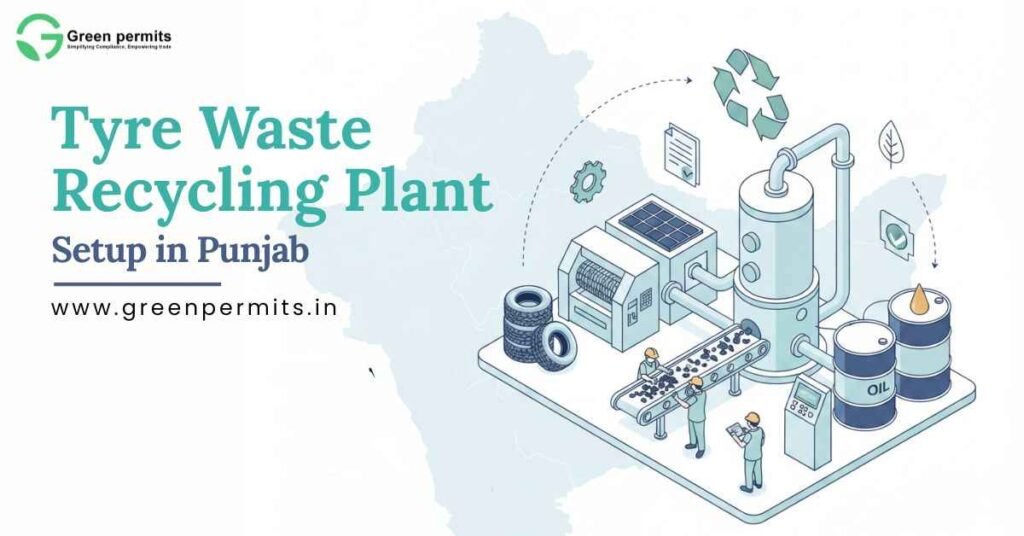
Punjab’s economy depends heavily on movement — of goods, crops, and people. Trucks run day and night across highways, tractors operate year-round, and industrial vehicles are constantly in use. Every one of these vehicles generates tyre waste, and that waste doesn’t disappear on its own.
What makes Punjab especially attractive for tyre recycling is not just the quantity of waste, but the predictability of supply. Tyre waste generation here is steady, not seasonal, which is critical for running a recycling plant efficiently.
Other reasons Punjab is becoming a preferred destination include:
From a business perspective, Punjab offers volume security, which directly reduces raw material uncertainty.
Choosing the right location affects everything — approval timelines, logistics cost, inspection outcomes, and even buyer access.
Ludhiana remains Punjab’s industrial backbone. With dense truck movement, warehouses, and manufacturing units, tyre waste availability is consistent. The city also offers proximity to buyers of crumb rubber and recycled materials.
Jalandhar’s strength lies in its manufacturing and commercial vehicle activity. It is particularly suitable for shredding and crumb rubber units supplying sports goods and rubber product manufacturers.
Amritsar sees steady tyre waste generation due to tourism transport, border logistics, and freight movement. Medium-capacity plants work best here, especially where land availability is controlled.
Mohali offers better infrastructure and relatively smoother compliance experiences. Industrial areas here are often preferred by first-time investors who want fewer zoning and inspection challenges.
Practical Insight:
Industrial plots with clear land-use approvals reduce objections during PPCB site inspections and speed up the approval cycle.
Tyre waste in Punjab comes from everyday economic activity rather than isolated industries.
| Sector | Approximate Share |
|---|---|
| Transport & Logistics | 55–60% |
| Agriculture | 25–30% |
| Industrial & Commercial | 10–15% |
What this means for recyclers:
Most tyre waste is generated locally, keeping transportation costs low and supply chains short. This improves margins and operational predictability.
Tyre recycling is treated as a regulated activity under hazardous waste rules. Approvals are not optional, and enforcement in Punjab has become noticeably stricter.
| Stage | Expected Duration |
|---|---|
| Consent to Establish | 30–60 days |
| Installation & Site Readiness | 45–60 days |
| Consent to Operate | 30–45 days |
Common Mistake:
Many businesses order machinery or start construction before CTE approval. This often leads to objections, redesigns, or complete rejection.
Machinery selection decides not just investment size, but also compliance burden.
| Machinery Type | Capacity Range | Cost Range |
|---|---|---|
| Tyre Shredding Line | 1–5 TPH | ₹40–80 Lakhs |
| Crumb Rubber Plant | 2–4 TPH | ₹1.2–2.5 Crore |
| Pyrolysis Plant | 5–20 TPD | ₹3–6 Crore |
Compliance Reality:
Pyrolysis plants face higher scrutiny due to emissions and fire risk. Shredding and crumb rubber units usually face fewer objections and faster approvals.
Punjab encourages recycling and circular economy businesses, especially under MSME frameworks.
Important Note:
Incentives are linked to proper approvals and ongoing compliance. Non-compliant units often lose eligibility.
Punjab already has an established market for recycled tyre products.
Real-World Example:
A small recycler near Jalandhar focused only on crumb rubber supply instead of pyrolysis. Lower regulatory risk and steady local demand helped the business stabilize faster.
Tyre recycling plants are closely monitored due to fire and pollution risks.
What Happens If You Ignore This:
Inspections can result in immediate suspension of operations, even if other approvals are in place.
Business Advice:
Most delays happen due to poor planning at the layout and approval stage, not because of paperwork alone.
Across North India, several tyre recycling units have been shut down due to:
These shutdowns usually cost far more than the original compliance investment.
Tyre waste recycling in Punjab is no longer informal. It is monitored, inspected, and enforced. Businesses that treat compliance as part of their business model operate smoothly and scale faster.
Early planning saves:
Doing it right from the beginning creates a stable and scalable recycling business.
📞 +91 78350 06182
📧 wecare@greenpermits.in