
Primary Keyword: Environmental Compliance for Businesses in India
Environmental compliance refers to meeting all legal obligations related to waste management, pollution control, sustainability reporting, and extended producer responsibility. In India, compliance is no longer limited to large factories or polluting industries. It applies to manufacturers, importers, brand owners, recyclers, startups, and even digital-first businesses dealing with regulated products.
What has changed is not just the number of regulations, but the way they are enforced. Environmental authorities now rely on centralized digital portals, data reconciliation, and automated reporting systems. This has made compliance traceable, auditable, and enforceable at every stage of business operations.
For businesses, this means environmental compliance is no longer a back-office task. It directly affects licensing, imports, vendor relationships, and long-term scalability.
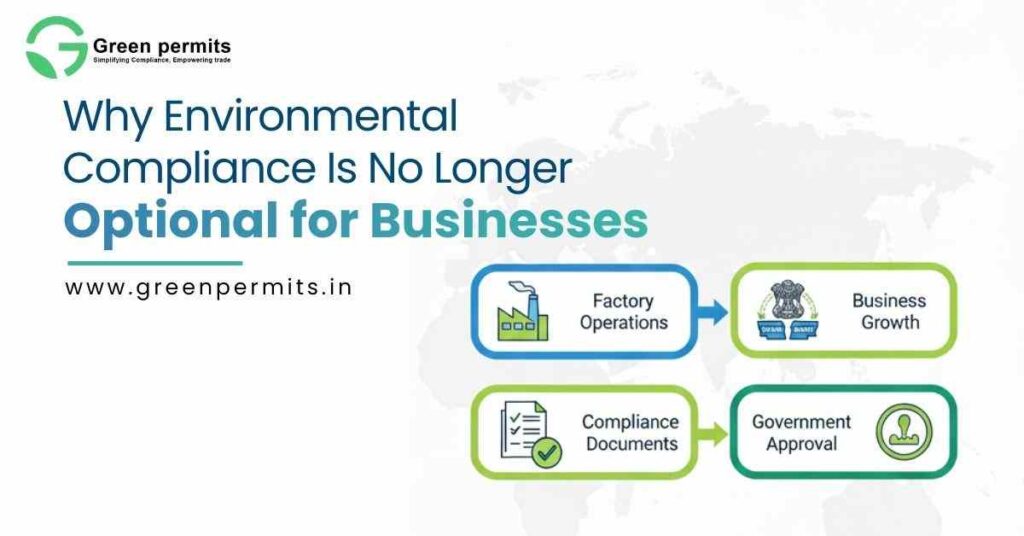
Environmental compliance has moved from being advisory to compulsory because of stricter monitoring and policy alignment with sustainability goals. Regulatory authorities now expect businesses to demonstrate compliance continuously, not just during inspections.
Several factors have contributed to this shift:
Businesses can no longer operate first and comply later. Registration, authorization, and reporting are required before or alongside operations.
Environmental compliance in India is governed by multiple regulations depending on the nature of the business, products handled, and waste generated. Most businesses fall under at least one regulatory framework, often more.
| Regulation Area | Who It Applies To | Compliance Requirement |
|---|---|---|
| E-Waste Management | Electronics manufacturers & importers | EPR registration & targets |
| Plastic Waste Management | Brand owners & importers | Plastic EPR compliance |
| Battery Waste Management | Battery & EV ecosystem | Battery EPR & reporting |
| Hazardous Waste Rules | Manufacturing units | Authorization & disposal |
| Air & Water Acts | Factories & plants | Consent to Establish & Operate |
Each of these regulations carries its own reporting timelines, renewal cycles, and penalty structures. Ignoring even one can affect the entire compliance profile of a business.
Environmental compliance is no longer isolated from core operations. It directly influences procurement, production planning, logistics, and vendor onboarding.
Businesses that are not compliant often face:
On the other hand, compliant businesses experience smoother operations, predictable timelines, and better control over regulatory risks.
Non-compliance carries both immediate and long-term consequences. While penalties are the most visible impact, the hidden costs often affect businesses more severely.
| Area | Compliant Business | Non-Compliant Business |
|---|---|---|
| Legal Exposure | Minimal | High risk of notices |
| Operational Continuity | Stable | Frequent disruptions |
| Financial Planning | Predictable | Unplanned penalties |
| Brand Credibility | Strong | Damaged trust |
Environmental compensation, license suspension, and forced shutdowns are no longer rare outcomes. Authorities increasingly act without prolonged warning periods.
Environmental compliance has become a prerequisite for growth, especially for businesses aiming to scale operations, attract investment, or enter regulated markets.
Compliance plays a key role in:
Investors and corporate buyers increasingly review compliance records before entering long-term partnerships. A weak compliance profile can limit growth opportunities, regardless of business potential.
Businesses that approach compliance proactively gain a strategic advantage. Early registration and structured compliance planning reduce operational stress and financial risk.
Proactive compliance allows businesses to:
Instead of reacting to notices or inspections, compliant businesses stay in control of their regulatory obligations.
Green Permits works with businesses across India to simplify environmental compliance and certification processes. Our focus is on clarity, accuracy, and long-term compliance stability.
We assist with:
Our approach ensures businesses meet regulatory requirements without diverting focus from core operations.
Environmental compliance is no longer optional because enforcement mechanisms are stronger, penalties are stricter, and compliance data is fully traceable. Businesses that integrate compliance into their operational strategy gain stability, credibility, and growth readiness.
Those who delay or ignore compliance face increasing legal, financial, and reputational risks.
📞 +91 78350 06182
📧 wecare@greenpermits.in
👉 Book a Consultation with Green Permits