
In Haryana, tyre waste is no longer an occasional by-product—it is a continuous operational issue for transporters, manufacturers, and logistics companies. Every industrial cluster generates discarded tyres daily, yet disposal options remain fragmented. Many businesses still transport waste tyres to other states, increasing logistics costs and compliance exposure.
This gap between high tyre waste generation and limited local recycling infrastructure is why Haryana is increasingly attracting entrepreneurs, recyclers, and industrial investors looking for sustainable, long-term business opportunities.
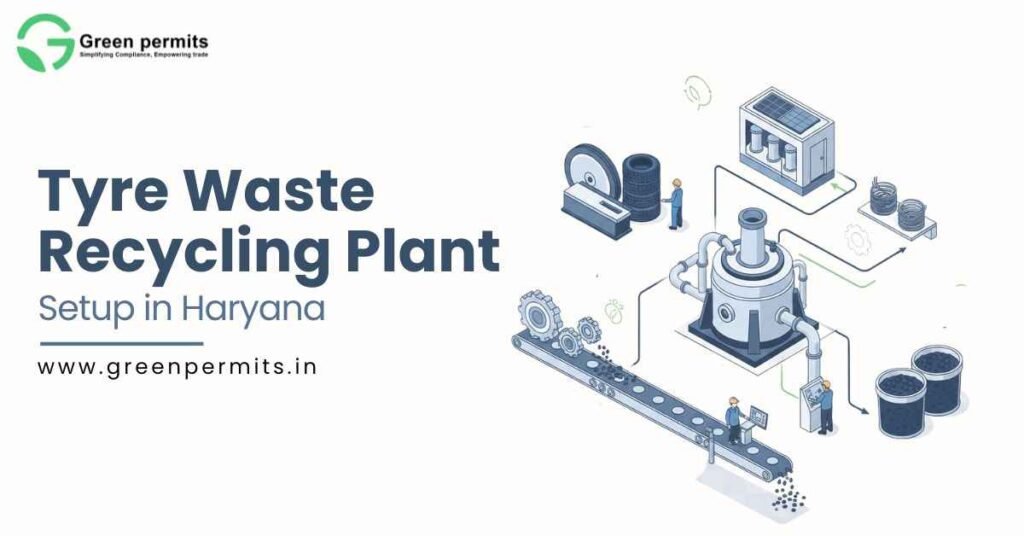
Haryana’s strength lies in volume and consistency. Unlike seasonal waste streams, tyre waste flows steadily throughout the year due to constant vehicle movement and replacement cycles.
Several structural factors support this:
From a recycler’s perspective, this translates into lower raw material uncertainty, better plant utilization, and predictable monthly throughput—critical for financial stability.
Choosing the right location is one of the most underestimated decisions in tyre recycling projects. Beyond land cost, location affects approval speed, labour availability, and long-term operational flexibility.
| Location | Practical Business Advantage |
|---|---|
| Gurugram | High fleet density, corporate waste contracts |
| Manesar | Auto OEM ecosystem, industrial zoning clarity |
| Faridabad | Mature industrial base, skilled workforce |
| Rohtak | Lower land cost, emerging logistics corridors |
Projects located inside notified industrial areas usually face fewer objections during consent processing, especially related to land use and local body permissions.
Tyre recycling plants in Haryana benefit from organized procurement channels. Most tyre waste originates from businesses rather than households, allowing recyclers to build structured supply agreements.
Key procurement advantages include:
A documented procurement strategy also strengthens the recycler’s position during inspections, where authorities increasingly verify source legitimacy and quantity records.
Regulatory approvals form the backbone of a tyre recycling project. Authorities evaluate not only the activity but also its environmental and operational safeguards.
| Approval | Authority | Business Impact |
|---|---|---|
| Consent to Establish (CTE) | Haryana SPCB | Legal clearance to build |
| Consent to Operate (CTO) | Haryana SPCB | Permission to run commercially |
| Hazardous Waste Authorization | HSPCB | Covers oil, char, residues |
| Factory License | Labour Department | Workforce legality & safety |
Many delays occur when businesses treat approvals as paperwork rather than project milestones. Incorrect sequencing often leads to inspection objections and financial setbacks.
Machinery planning is where many projects go wrong. Selecting high-capacity equipment without aligning approvals often leads to consent mismatches and compliance notices.
Core machinery generally includes:
| Approved Capacity | Typical ROI Timeline |
|---|---|
| 10–15 TPD | 20–24 months |
| 20–30 TPD | 16–20 months |
Projects that match installed capacity exactly with approved capacity usually experience smoother CTO renewals and fewer inspection issues.
Haryana encourages recycling under its industrial and MSME policies, but incentives are performance-linked, not guaranteed.
Incentives may include:
To retain incentives, businesses must demonstrate continuous compliance, proper record-keeping, and timely renewals.
Recycled tyre outputs serve multiple industries, making demand relatively stable even during economic slowdowns.
| Product | End-Use Industry |
|---|---|
| Pyrolysis Oil | Cement plants, industrial boilers |
| Carbon Black | Rubber goods, plastics |
| Steel Wire | Secondary steel manufacturers |
Diversified buyers across sectors help recyclers manage price fluctuations and maintain steady cash flow.
Environmental compliance is the most closely monitored aspect of tyre recycling operations.
Authorities typically assess:
Even plants with valid approvals face action when actual operations drift from approved conditions, highlighting the importance of internal compliance monitoring.
A structured implementation plan reduces regulatory uncertainty and capital risk.
Businesses that integrate compliance into execution—not as an afterthought—scale faster and more safely.
A Rohtak-based recycler once faced suspension due to inconsistencies in residue disposal records, despite holding valid approvals. The issue was operational discipline, not licensing.
Frequent risk areas include:
Ignoring these can halt operations overnight, regardless of investment size.
Tyre waste recycling in Haryana offers strong commercial potential, but only when business planning and regulatory compliance move together. Early approvals, capacity alignment, and disciplined operations protect investment and ensure long-term stability.
📞 +91 78350 06182 | 📧 wecare@greenpermits.in
Book a Consultation with Green Permits