
When Arindam, a logistics fleet owner from Howrah, decided to retire his ageing trucks, he expected a routine disposal process. Instead, he discovered a massive opportunity hiding in plain sight: West Bengal had become one of India’s fastest-growing hubs for vehicle scrapping, with OEM-backed RVSFs, steady ELV supply from urban clusters, and strong industrial demand for secondary metals. What started as a compliance chore turned into a business idea — and he realised he wasn’t alone.
If you’re exploring the potential of starting a vehicle scrapping plant in West Bengal, this guide breaks down the ecosystem, regulations, costs and real market drivers in a simple, practical way.
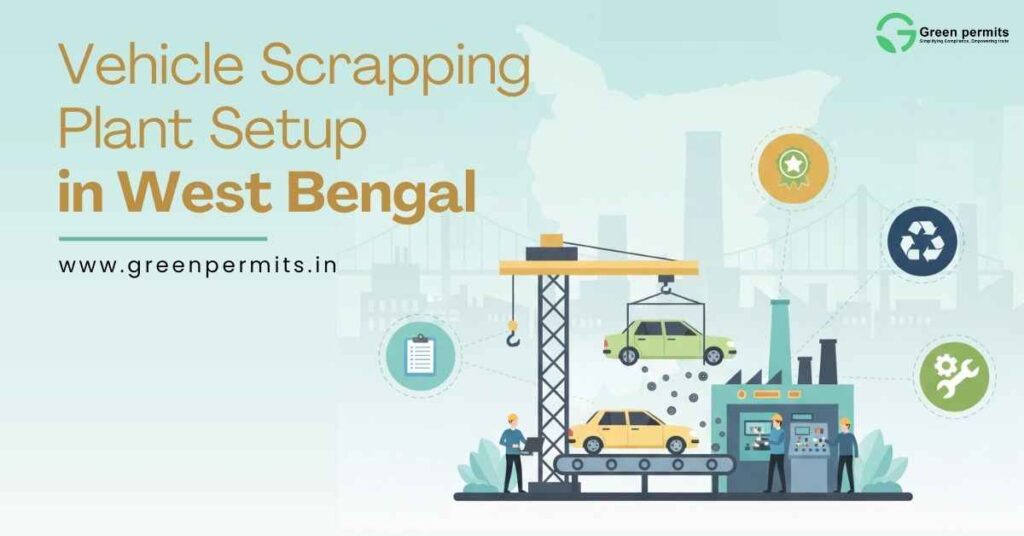
West Bengal has emerged as a key player in India’s scrappage ecosystem, driven by rapid urbanisation, dense transport networks, and growing industrial demand for processed scrap. The state has also seen early adoption of organised RVSFs — including major OEM-supported facilities — signalling investor confidence.
Each of West Bengal’s major industrial belts brings unique advantages for a scrapping plant.
Kolkata & Kalyani Belt
Durgapur Industrial Zone
Asansol–Raniganj Belt
Strategically selecting a zone impacts:
With over a decade of heavy commercial activity, West Bengal’s vehicle base is entering end-of-life in large volumes.
Practical Insight
Most RVSFs begin with 50–70% of their input from commercial fleets because fleet owners prefer formal scrapping — faster documentation, assured de-registration, and compliance with transport rules.
Setting up an RVSF requires both central approvals under MoRTH’s RVSF Rules and state-level environmental permissions.
| Approval Type | Issuing Authority | Purpose / Notes |
|---|---|---|
| RVSF Registration (Central) | Ministry of Road Transport & Highways | Mandatory for operating a Registered Vehicle Scrapping Facility |
| Application Routing | NSWS Portal (Know Your Approvals + State Selection) | Auto-generates WB-specific approvals list |
| CTE (Consent to Establish) | West Bengal Pollution Control Board | Pre-construction approval for site and operations |
| CTO (Consent to Operate) | WBPCB | Post-installation clearance for running the plant |
| Hazardous Waste Authorisation | WBPCB | Required for handling oils, batteries, coolants |
| Factory Licence | Labour Dept | Mandatory if employing 10+ workers with machinery |
| Trade Licence | Local Municipality/Panchayat | Operational permission for industry |
| Fire NOC | Fire & Emergency Services | Safety compliance for plant & storage areas |
| Building Plan Approval | Local Development Authority | Structural & land-use compliance |
| Weights & Measures Certification | Legal Metrology Dept | Required for weighing systems |
Business Impact
Early-stage applicants often underestimate the CTE–CTO timelines, leading to project delays. Proper document structuring often reduces approval cycles substantially.
A compliant scrapping plant must follow a systematic depollution-to-dismantling sequence.
| Plant Capacity | Machinery Investment Range | Land Requirement | Ideal Use Case |
|---|---|---|---|
| 20–25 vehicles/day | ₹1.2–1.8 crore | 0.5–1 acre | Entry-level RVSF with local sourcing |
| 40–50 vehicles/day | ₹2.5–4 crore | 1–1.5 acres | Growing plant serving multiple districts |
| 100+ vehicles/day | ₹6–10 crore | 2+ acres | OEM-tied, high-volume facility |
Operational Insight
Depollution and safe fluid recovery are the highest compliance risks — improper design can lead to immediate suspension of approval.
While West Bengal does not have RVSF-specific subsidies, scrapping units fall under:
These can significantly lower early CAPEX. Eligibility depends on district category and investment size.
Scrap from RVSFs is a high-value commodity when processed properly.
Scrapping facilities must adhere to MoRTH’s RVSF norms and strict environmental guidelines.
A plant in another eastern state had operations halted for three months because residual fuel leaked into the soil due to a faulty depollution pit. The event led to major financial losses — and a valuable lesson: proper containment design is non-negotiable.
A structured roadmap helps new investors move from concept to commissioning smoothly.
Business Tip
Start building ELV supply agreements (fleets, OEM service centres, taxi unions) before commissioning. Early contracts reduce first-year operational risk.
Setting up a vehicle scrapping plant in West Bengal is now a practical, high-potential business opportunity. With strong ELV availability, expanding industrial demand, and an evolving compliance framework, early movers can secure a strong foothold in this growing ecosystem.
Getting the approvals right from day one saves significant delays and prevents compliance risks — making expert guidance invaluable during setup.
+91 78350 06182
wecare@greenpermits.in
Book a Consultation with Green Permits