
A mid-sized electronics importer recently faced a shipment hold at Indian customs. The issue was not pricing, logistics, or documentation. It was non-compliance with EPR obligations and missing CPCB registration.
Within 30 days, the business experienced:
This is not an isolated case. Across India, businesses are increasingly facing operational disruptions because ESG is now tied directly to regulatory compliance.
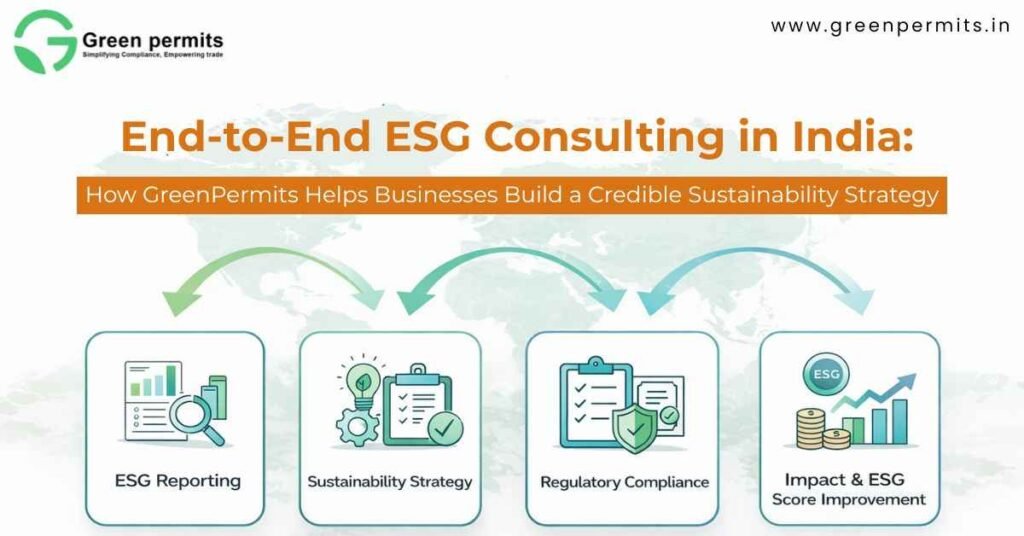
ESG in India has moved beyond sustainability reporting. It has become a structured compliance system linked with environmental regulations, approvals, and operational permissions.
Today, ESG directly impacts:
The framework is driven by the Environment Protection Act, 1986 and supported by multiple rules introduced or amended between 2022 and 2025. These include E-Waste Rules, Plastic Waste amendments, Battery Waste Rules, and ELV Rules.
For most businesses, ESG is no longer a strategic choice. It is a compliance requirement that determines whether operations can continue without disruption.
India’s ESG framework is fundamentally compliance-driven. Unlike global markets where ESG is largely disclosure-based, Indian ESG integrates regulatory enforcement with measurable environmental obligations.
The system connects multiple authorities, including CPCB, SPCB, and SEBI, into a single compliance structure. A business cannot claim ESG alignment unless it meets actual regulatory obligations.
From a practical perspective, ESG in India is built on five pillars. These pillars determine how compliance is measured, reported, and enforced.
For example, a manufacturer producing 1,000 tonnes of plastic packaging annually may be required to meet recycling targets ranging from 20 percent to 100 percent over a phased period. These targets are not theoretical. They must be fulfilled through actual recycling or certificate purchase.
India’s ESG regulations have evolved significantly in the last 24 months. The introduction of amendments in 2025 has made compliance more traceable, data-driven, and enforceable.
| Regulation | Requirement | Deadline | Applicable To | Risk |
|---|---|---|---|---|
| E-Waste Rules 2022 | CPCB registration + EPR targets | Ongoing | Electronics sector | Business restriction |
| PWM Amendment 2025 | QR code traceability | Immediate | Packaging companies | Penalty + product hold |
| Battery Waste Rules 2025 | EPR labeling + recycling | Immediate | Battery sector | Market ban risk |
| ELV Rules 2025 | 8%, 13%, 18% targets | Annual | Automobile sector | Compliance failure |
| EP Act 1986 | Enforcement law | Continuous | All industries | Legal penalty |
These regulations operate together. A single product may fall under multiple rules simultaneously. For example, an electric vehicle manufacturer must comply with battery rules, e-waste rules, and ELV regulations at the same time.
This layered compliance structure increases the complexity of ESG implementation and makes professional guidance essential.
The CPCB centralized portal is the operational backbone of ESG compliance in India. It is not just a registration platform. It is a real-time compliance monitoring system.
Every business dealing with regulated waste categories must register on the portal and submit periodic filings. Without portal registration, operations are considered non-compliant.
The process begins with registration, which typically takes 15 to 30 working days. During this period, CPCB may raise queries within 30 days, and businesses are required to respond within 7 days. Delays at this stage often lead to rejection.
Once registered, businesses must maintain continuous compliance through filings and reporting.
The portal also tracks environmental compensation, which can range from ₹1 lakh to ₹50 lakh depending on the scale of non-compliance.
From an ESG perspective, the CPCB portal converts sustainability commitments into measurable compliance actions.
Extended Producer Responsibility is the most critical component of ESG compliance in India. It directly links business operations with environmental accountability.
Under EPR, producers are responsible for managing the waste generated by their products. This responsibility is quantified in percentage targets and measured annually.
For example, in the automobile sector under ELV rules, targets are structured as follows:
In the electronics sector, targets for metal recovery may increase from 20 percent to 100 percent over a period of 5 to 6 years.
Businesses can meet these obligations through two primary methods:
The certificate mechanism ensures that compliance is backed by actual recycling activity. This makes ESG measurable and auditable.
For companies, EPR is not just a compliance requirement. It becomes a key ESG performance indicator that investors and regulators evaluate.
ESG compliance in India follows a structured timeline. Missing even one deadline can result in penalties or operational disruption.
| Step | Authority | Timeline | Documents | Risk |
|---|---|---|---|---|
| Registration | CPCB | 15–30 days | GST, PAN, CIN | Rejection |
| Query Handling | CPCB | 30 days | Clarifications | Delay |
| Response | Business | 7 days | Updated data | Rejection |
| Quarterly Filing | CPCB | Every quarter | Returns | Penalty |
| Annual Return | CPCB | Before 30 June | Full data | Legal risk |
| Target Declaration | CPCB | Before 30 April | EPR plan | Non-compliance |
In practice, companies that fail to align internal teams with these timelines often face cascading delays. A delayed registration can impact product launches, imports, and manufacturing approvals.
The 2025 amendments have introduced stricter compliance requirements, especially around traceability and reporting.
The most significant change is the introduction of mandatory QR code or barcode systems. This allows authorities to track packaging from production to disposal.
Businesses must now ensure that every unit of packaging carries identifiable information linked to their registration.
Failure to comply can lead to penalties and product restrictions.
Battery compliance has become more stringent with mandatory labeling and traceability requirements.
Producers must display their EPR registration number on batteries and related packaging. This ensures accountability at every stage of the product lifecycle.
Given the growth of electric vehicles and electronics, this regulation is expected to impact a large number of businesses.
E-Waste compliance remains one of the most enforced areas under ESG.
All entities must register on the CPCB portal and cannot operate without valid registration. The system also requires detailed reporting of production, waste generation, and recycling activities.
For example, a company producing 10,000 units of electronic goods annually must declare waste generation and ensure equivalent recycling through authorized channels.
The risks associated with ESG non-compliance are both regulatory and operational. Businesses often underestimate the scale of impact until it affects production or sales.
Regulatory risks include cancellation of CPCB registration and refusal of SPCB approvals. Without these approvals, operations cannot legally continue.
Operational risks are equally severe. These directly affect revenue and business continuity.
From an ESG perspective, non-compliance also affects investor confidence and audit outcomes, especially for companies required to file BRSR reports.
Green Permits provides a structured approach to ESG compliance by integrating regulatory requirements into business operations.
The focus is not just on documentation but on creating a system that ensures long-term compliance.
Green Permits handles CPCB registrations, SPCB approvals, and environmental authorizations. This reduces the risk of rejection and delays.
EPR compliance is managed through strategic planning and execution.
For companies required to submit ESG disclosures, Green Permits helps structure data in alignment with regulatory requirements.
The biggest advantage is integration. Instead of handling ESG, EPR, and approvals separately, Green Permits creates a unified compliance framework.
ESG in India is no longer a voluntary initiative. It is a regulatory system backed by laws, targets, and enforcement mechanisms.
Businesses that delay compliance face increasing risks, including financial penalties, operational disruption, and legal exposure. On the other hand, companies that implement ESG early benefit from smoother approvals, better investor confidence, and long-term sustainability.
The difference lies in execution. ESG requires structured planning, accurate data, and continuous monitoring.
For most businesses, the challenge is not understanding ESG. It is implementing it correctly across regulations, timelines, and operations.
📞 +91 78350 06182
📧 wecare@greenpermits.in